
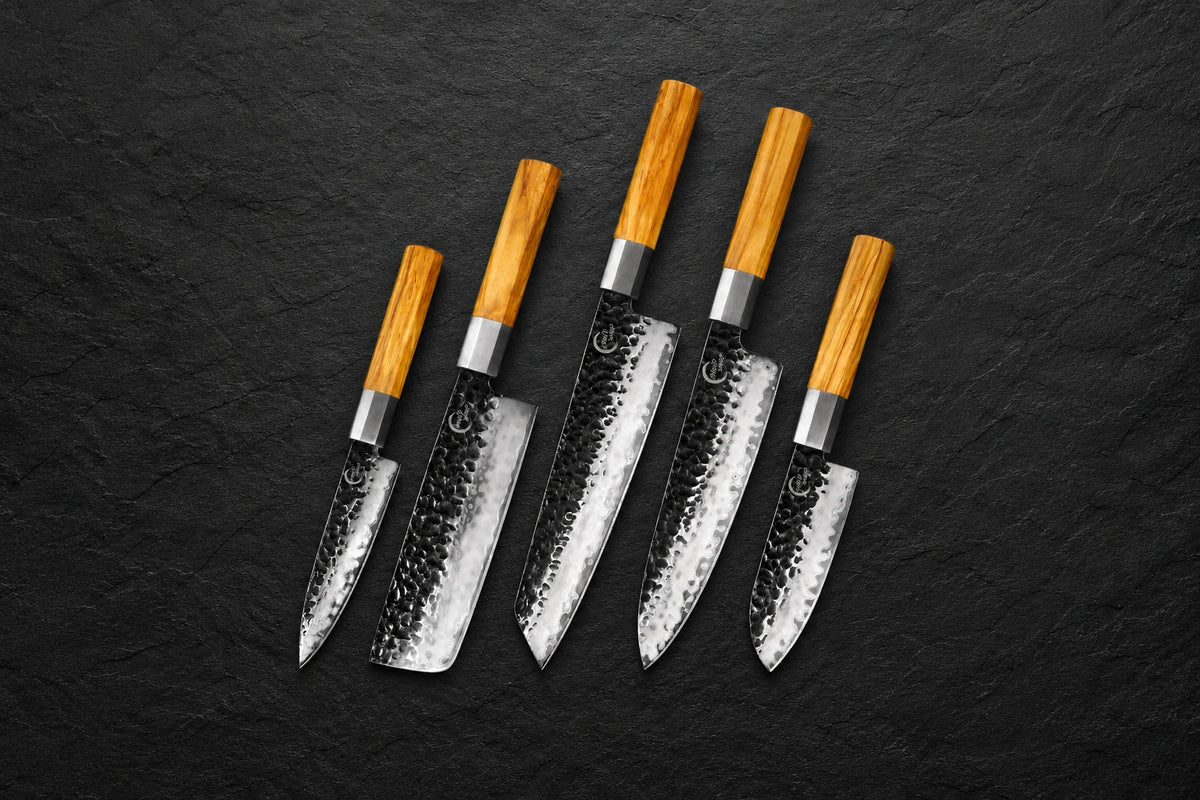
A kitchen knife steel hardness guide should help you understand a listing without turning one number into the whole purchase. KIRU’s Kanso Series lists an AUS-10 cutting core with two layers of 430 steel and hardness of 56+ HRC. Those details describe this range; another KIRU model can have a different construction and hardness entry.
Separate three questions as you compare: what steel is named, how the blade construction is described and what hardness is stated. Then add the practical question of which actual blade or set option you want for your cooking.
Read the core and outer-layer fields separately
In the Kanso listing, the cutting core and surrounding layers are named individually. Read the complete construction statement together rather than lifting the AUS-10 label away from the rest of the description. The listed olive wood handle and hammered surface are further details, each answering a different part of the comparison.
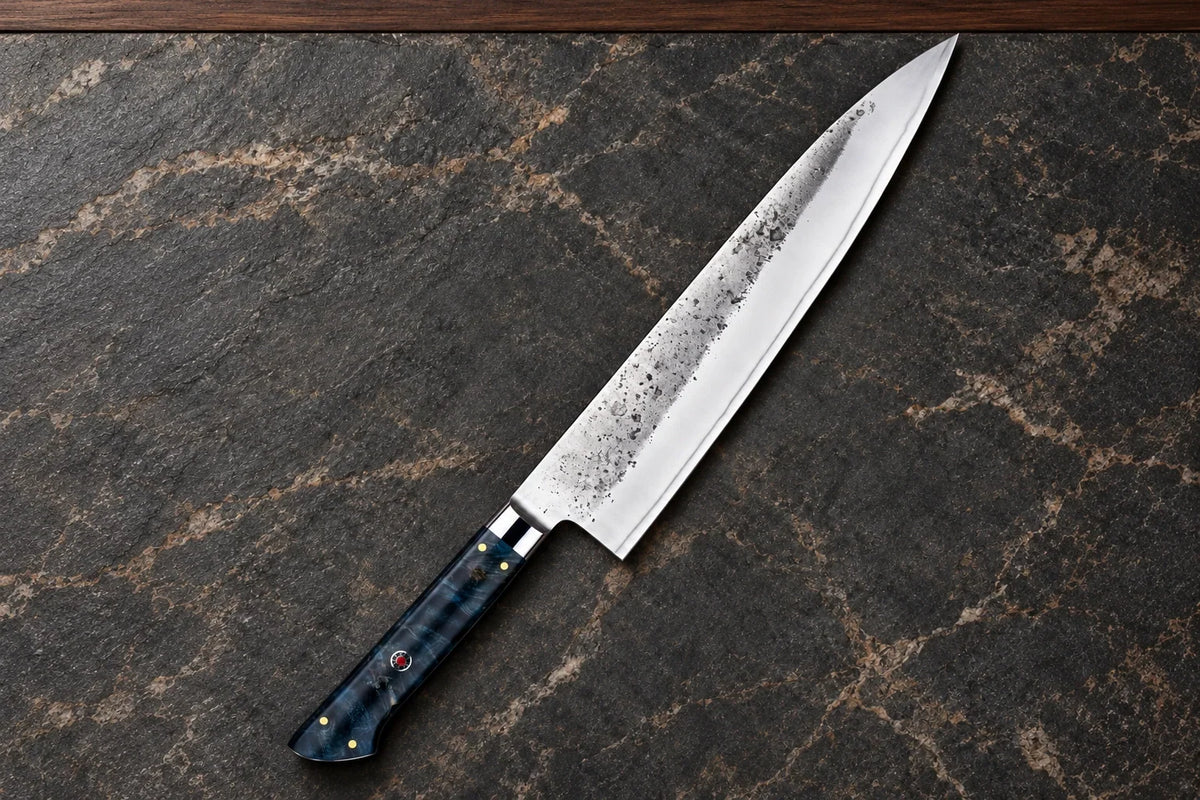
The Indigo Series Gyuto Chef Knife is described differently: three-layer composite steel with a 10Cr15CoMoV core. It also has a specific everyday role in slicing, chopping and dicing vegetables and boneless meat. Compare its material statement alongside that individual-blade purpose, rather than treating a set and a single knife as identical choices.
Understand what the hardness entry says
HRC identifies the Rockwell C hardness scale, as explained by NIST’s hardness standards page.
KIRU lists Kanso at 56+ HRC and the Indigo Gyuto at 60±2 HRC. Preserve the notation when reading them: the plus sign and the stated variation are part of the information. A listing that gives a range is different from one that gives a single value with a plus sign.
Use those entries to distinguish the model descriptions. They are not a cutting trial of the two products in your kitchen. If your main decision is whether to buy several preparation roles or one everyday blade, settle that practical distinction before a hardness figure takes over the shortlist.
Keep missing details as a useful question
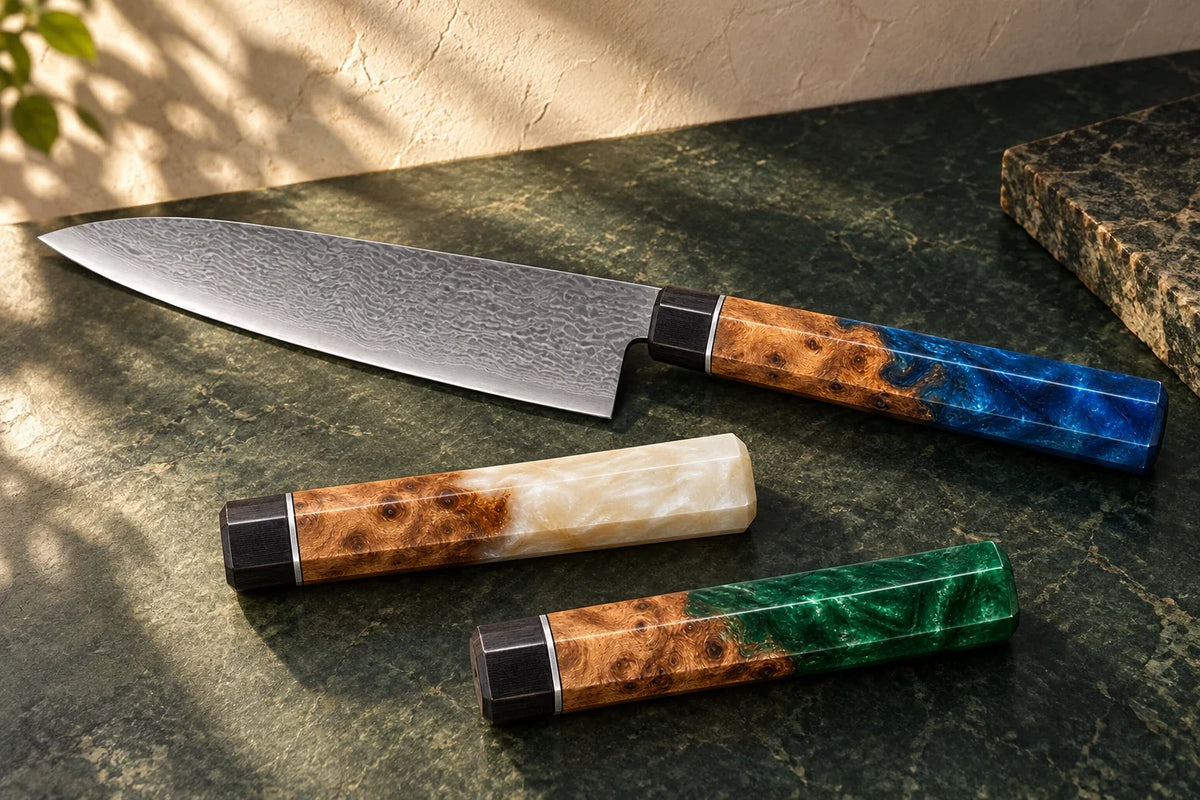
The Kurogane Series names a high-carbon AUS-10 core with 430 stainless steel outer layers, a 2.5mm blade thickness and an ebony wood plus natural wood handle. Compare those stated details on their own terms. A similar named core does not mean every other specification from Kanso also applies.
For a shortlist, write each range in a separate row and copy only its own named construction and hardness information. Leave an unlisted detail open rather than filling it from a neighbouring product. This gives you a precise question to resolve if that detail matters to the purchase.
Bring the comparison back to dinner
Imagine two buying situations. One cook is replacing a main blade for vegetables and boneless ingredients. Another is establishing several everyday preparation roles together and wants to examine a set. The material details matter within both comparisons, but the starting decisions are different.
A cook interested in a coordinated appearance might consider Kanso’s olive wood handle and hammered surface alongside the selected five-piece option. A cook seeking one main role might begin with the Indigo Gyuto’s described uses. Neither shortlist needs a claim about guaranteed edge life to be purposeful.
Our single knife or set guide helps resolve that first choice. Browse Knife Sets with the material statement, hardness entry and intended roles kept together. Use the details to understand a particular product, then choose the setup that answers your cooking needs.

Leave a comment
This site is protected by hCaptcha and the hCaptcha Privacy Policy and Terms of Service apply.