
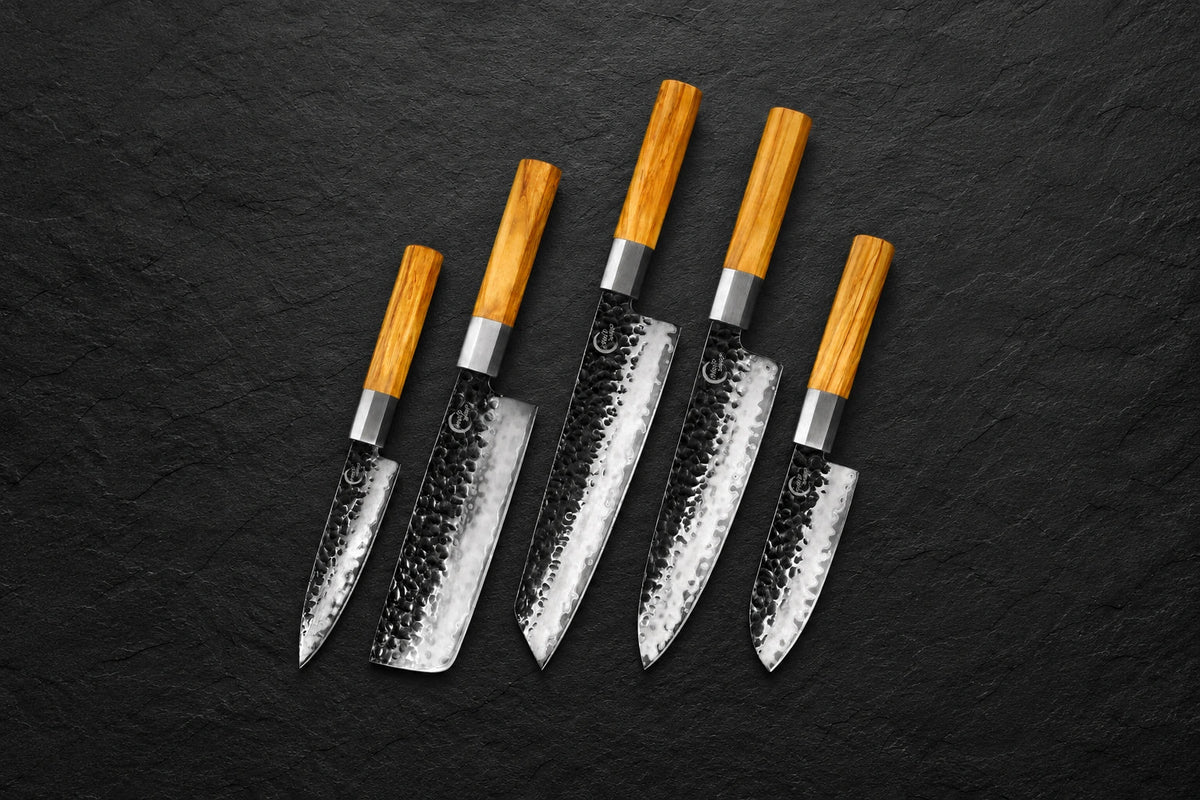
A single knife or knife set decision is clearest when you list the jobs your kitchen needs. If one everyday blade is missing, address that role directly. If several preparation roles need replacing together, compare a coordinated set. The Kanso Series offers 5 Piece Set and 5 Piece Set with Wood Cover options, giving you two specific choices to examine.
Start with your existing tools on paper. Record which ones you use for dinner, small fruit preparation and other repeated kitchen jobs. The aim is a useful set of roles, rather than a larger total of objects.
Give each current knife a job
Think through a week of meals: a vegetable pasta, sandwiches, a tray dinner and fruit for breakfast. Which knife normally prepares each ingredient? Where do you reach for a substitute because you lack a suitable everyday role? Those answers show the difference between a genuine gap and an appealing extra.
A June 2026 Ideal Home organising feature encourages reviewing duplicate and little-used tools when kitchen space is limited.
For your own decision, mark each existing role as keep, replace or missing. A cook with a useful small prep knife may only need to replace the larger everyday blade. Another cook starting a kitchen from scratch may have several ordinary jobs to cover at once.
Choose one blade when the gap is specific
If the main gap is mixed dinner preparation, the Indigo Series Gyuto Chef Knife has a stated role in slicing, chopping and dicing vegetables and boneless meat. That is a focused candidate for the main prep position rather than a reason to replace every tool in the drawer.
A small gap points elsewhere. The Timber Series offers separate paring and utility options, among its other profiles. A cook who mainly wants a smaller blade for fruit portions can consider that exact role without buying several overlapping everyday knives.
Consider a set when several roles belong together
A set makes more sense when you can explain several jobs it would answer. Perhaps you are establishing a new kitchen and want a coordinated starting point, or the tools used for several recurring tasks all need replacing. Compare the current included pieces with that preparation list before choosing.
The Kanso option names confirm a five-piece choice and a wood-cover version. Read the current description of the selected option for its contents rather than guessing the blade types from the count. Think about whether the presentation option is useful to your setup as well as whether the knives serve the jobs.
For example, a kitchen used mainly for two-person weekday dinners might keep a main blade and a smaller fruit-prep role at its centre. A household establishing several recurring cooking jobs together may have a different list. Compare the set against that written list, so every intended role has a reason.
Plan a place for the whole choice
One added blade and a set raise different storage questions. Look at the space you already have and whether the existing storage suits the actual profiles being considered. Include that part of the decision before a coordinated appearance draws attention away from the kitchen’s working layout.
Browse KIRU’s Knife Sets after identifying several useful roles. If your list contains only one clear gap, keep the purchase focused on that blade. A considered setup can begin with a single choice and grow when another genuine preparation need appears.

Leave a comment
This site is protected by hCaptcha and the hCaptcha Privacy Policy and Terms of Service apply.