
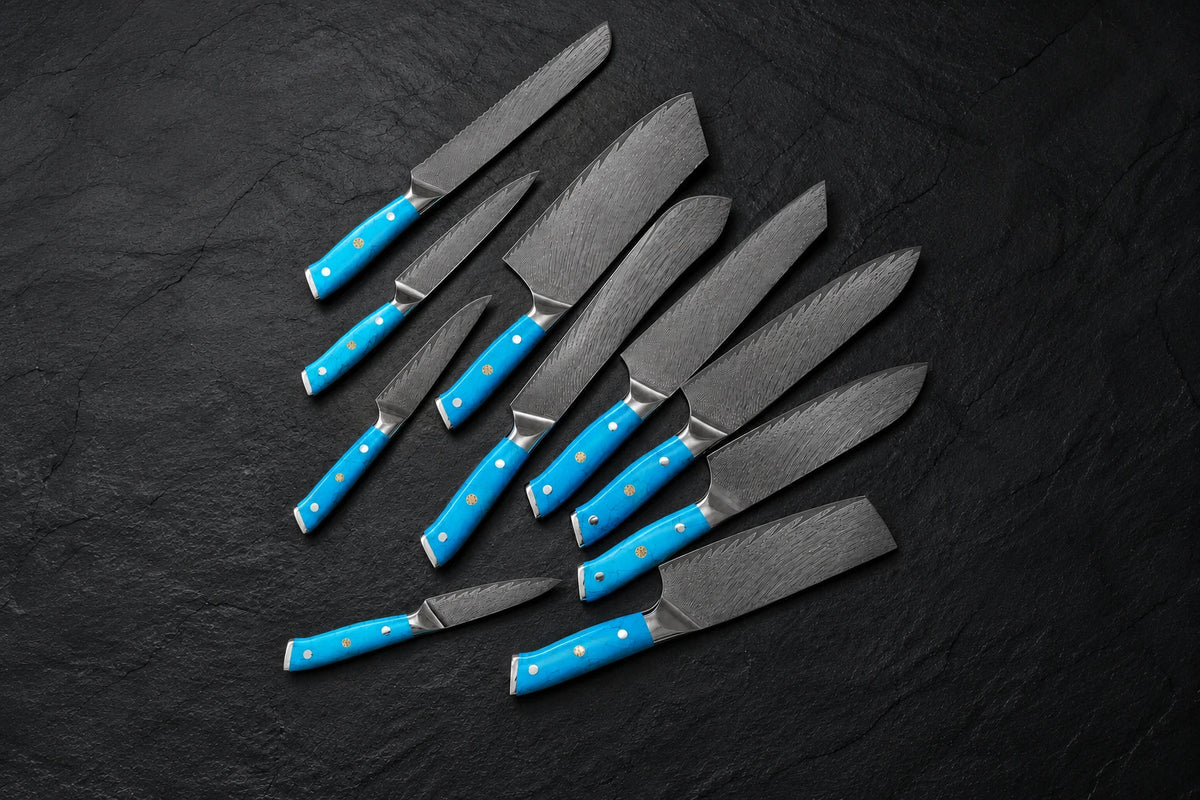
A bread knife vs chef knife choice starts with separating the loaf from the rest of lunch. The Lagoon Damascus Series includes an 8 Inch Bread option and a separate 8 Inch Chef option. If loaf preparation is the role you want to add, select the bread-designated blade rather than assuming the range name identifies one knife.
Think of a bread-and-soup lunch, a sandwich loaf or slices for a shared table. You may want a distinct bread role alongside the everyday knife that prepares vegetables and fillings. The decision is about the job, rather than a promise that one blade will handle every loaf in the same way.
Shun/KAI’s blade-shape guide identifies serrated bread knives as a distinct bread-cutting role, separate from general chef preparation. That is useful background; inspect the current Lagoon Bread option for its own edge details instead of transferring another manufacturer’s blade design.
Decide how you usually serve bread
A large shared loaf, small rolls and a sandwich loaf lead to different portioning plans. Before choosing, picture the bread you buy most often and the slices or portions you want. A dedicated bread option is most relevant when loaf preparation is repeated enough to deserve its own tool.
For example, a household that regularly serves bread with soup may want to prepare portions at the start of the meal and keep the bread role distinct from the vegetable preparation. A cook who usually buys ready-sliced bread might have a more pressing gap elsewhere. Let that habit shape the purchase.
You might want generous slices for a soup lunch but smaller pieces for a platter with several toppings. Naming the serving style helps establish what the bread role is for before comparing profiles.
Keep the filling jobs separate
The cucumber, tomato, prepared vegetables or other fillings are another part of a sandwich lunch. These are the everyday preparation roles to compare with a chef or smaller utility option. Avoid choosing an entire setup around the loaf while overlooking what you prepare to go inside it.
In the Harbor Series, KIRU lists a 7.5 Inch Bread option and an 8 inch Chef Knife option, as well as smaller blades. That gives you another range-level comparison. Read the selected knife’s description and images; a material detail shared across a range does not replace the distinction between its named profiles.
Give the loaf its own working area
Set out the board with the loaf on it before judging how much space remains. Allow a place for the portions and a separate serving area, rather than letting the loaf, sliced bread and bowl of fillings compete in the same small corner. The amount of bread you serve affects that arrangement.
For a weekend table, you might prepare the vegetable fillings first, clear the working area and then portion the bread for serving. For a simple lunch, you may only need a board and plate. The setup should suit the meal’s scale, with each preparation job clearly accounted for.
Choose the option, then the range
Lagoon’s list also includes utility, Santoku, Nakiri and other named options. Choose the 8 Inch Bread variant deliberately if that is your intended role. Its stabilised turquoise stone handle is a specific listed detail to consider after the task, rather than a reason to buy a different profile by mistake.
Our Santoku and chef guide covers the separate main-preparation question. Browse the Knife Series by actual options, and give the loaf a bread-designated choice when it fits your cooking. Keep the rest of the meal in view so the new knife adds a useful role to your existing setup.

Leave a comment
This site is protected by hCaptcha and the hCaptcha Privacy Policy and Terms of Service apply.