
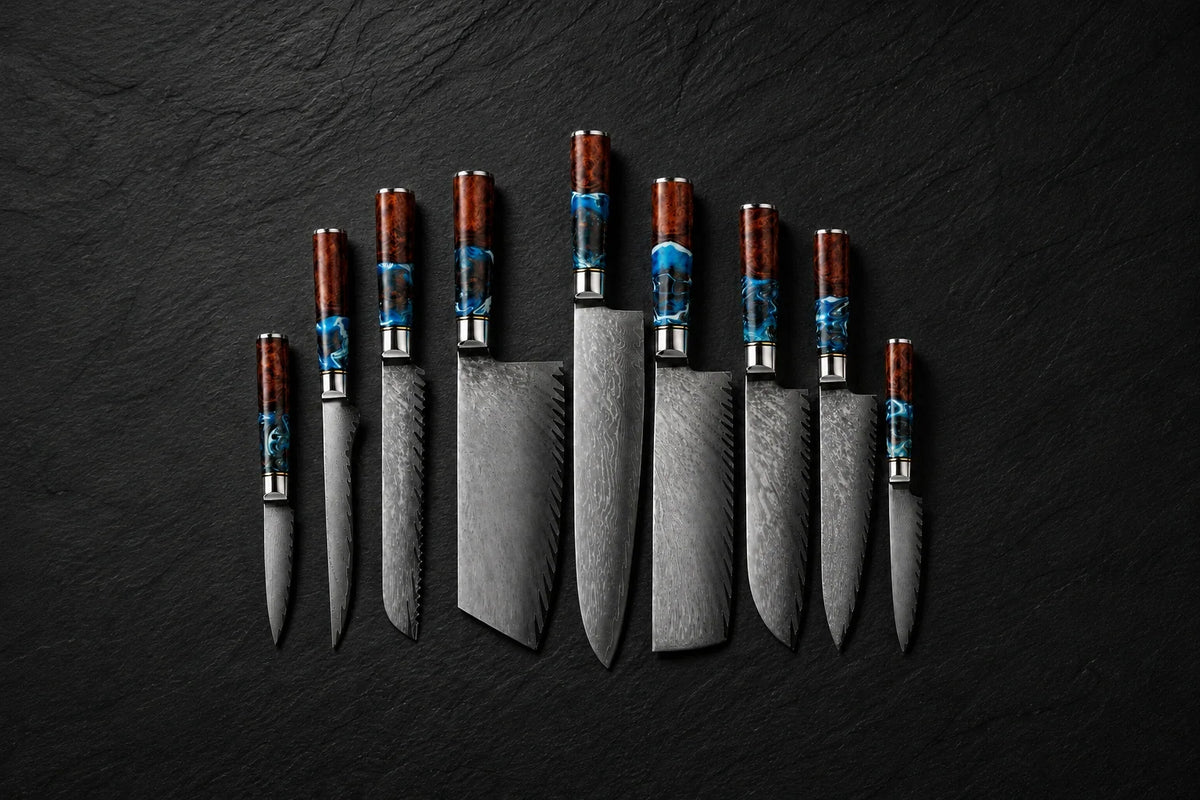
Choosing a Santoku or chef knife becomes clearer when you compare two actual options. The Harbor Series lists a 7.5 Inch Santoku and an 8 inch Chef Knife, alongside other profiles. Start there: you are comparing named blades within one range, rather than buying a single shape called Harbor.
Shun/KAI’s profile comparison explains the common distinction: chef knives often have a curved edge suited to rocking, while Santoku edges are commonly flatter for straighter cuts. Both can serve everyday preparation. For Harbor, compare the actual selected blade rather than assuming that general description establishes its precise geometry.
Build a short dinner-prep comparison
Choose a meal you know well, such as a pepper, onion and courgette pasta or a vegetable-and-boneless-protein tray meal. List the cuts: onion pieces, pepper strips, courgette slices and any separate portioning job. Then compare the two Harbor options against that list, paying attention to the actual product images and selected variant.
You may prefer to think of the Santoku option as a particular everyday prep choice within the range, while the chef option answers your wish for a chef-designated blade. Neither choice needs an elaborate collection around it. What matters is being able to explain why that specific option belongs in your weekly routine.
Read the length in the context of your board
The named lengths are close, but they remain separate options. Do not treat the difference between 7.5 and 8 inches as a complete description of how a knife will feel. The blade outline, handle and room available around your ingredients also enter the decision. Check the current selected option rather than comparing a photograph of a different Harbor blade.
On a smaller board, imagine the space occupied by the ingredient before the bowl of prepared food goes beside it. On a larger board, consider whether you like working on a few ingredients in turn or spreading out several. Those preferences help frame the size question without turning a number into a promise about comfort.
For a lunch built around chopped vegetables, your main concern might be a manageable everyday profile. For a dinner with longer ingredients to portion, you may prioritise a different outline. Use these familiar examples to narrow the options before considering a matching range.
Look at the role you already own
If your current main prep knife still answers the usual jobs, a different named profile may overlap with it. A smaller utility role or a dedicated vegetable blade could be the more meaningful addition. If you are replacing your main knife, comparing the Santoku and chef options directly makes more sense.
For a separate broader model, KIRU describes the Indigo Series Gyuto Chef Knife for slicing, chopping and dicing vegetables and boneless meat. Use that stated role as another reference point. Compare the intended preparation job first, then the details of each individual listing.
Keep the range name and variant separate
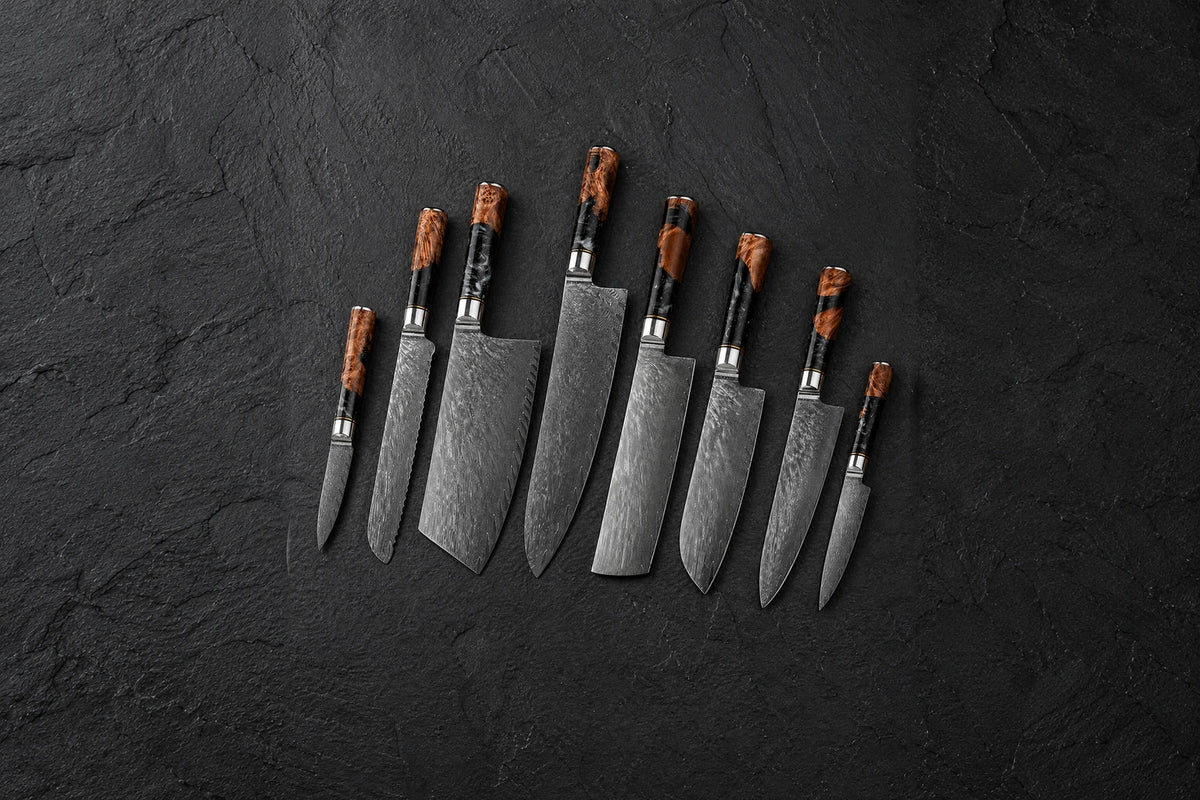
Harbor’s other options include paring, utility, bread and larger chef-designated blades. That means a range-level material description and a selected blade are two different pieces of information. KIRU lists natural hardwood and composite resin for the Harbor handle; the variant selector identifies which knife you are considering.
If you are still deciding what your first substantial blade needs to do, return to the preparation-first starting point. Then browse the Knife Series with one main role in mind. Choose the Harbor option whose actual profile and listed size fit that role, rather than asking the names to make the whole decision.

Leave a comment
This site is protected by hCaptcha and the hCaptcha Privacy Policy and Terms of Service apply.