
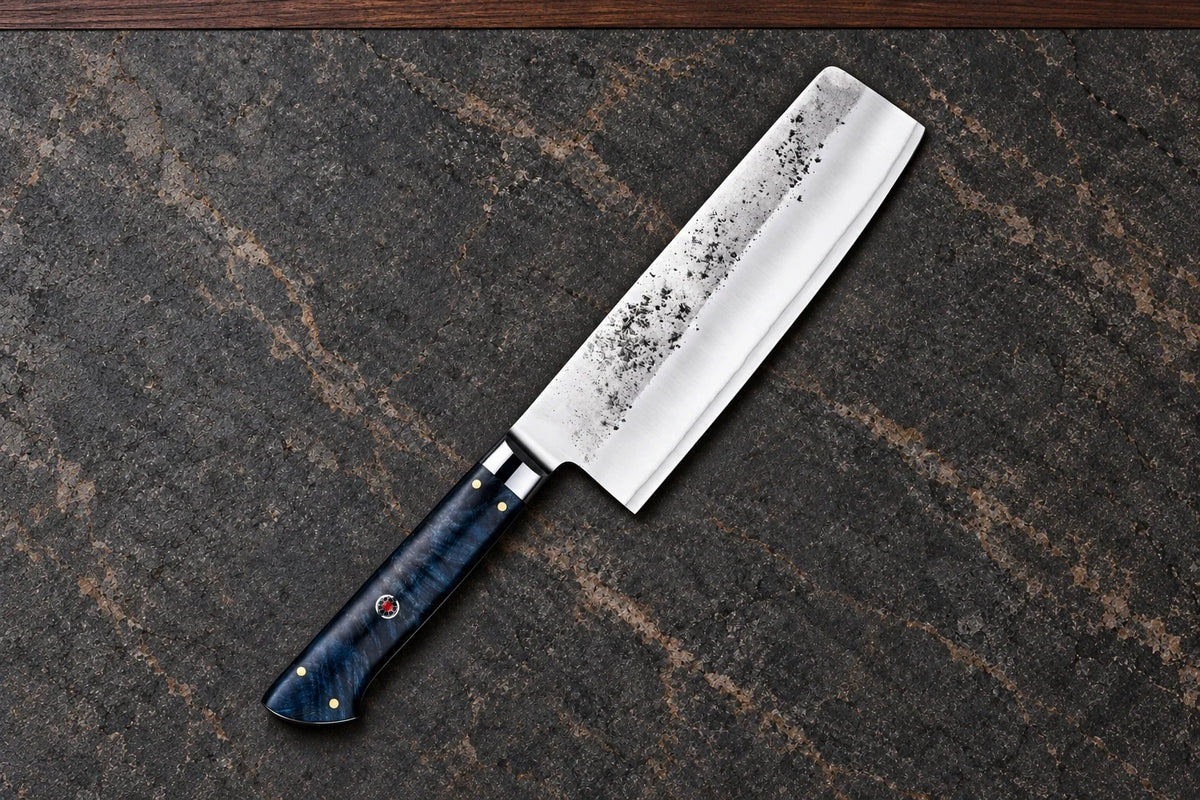
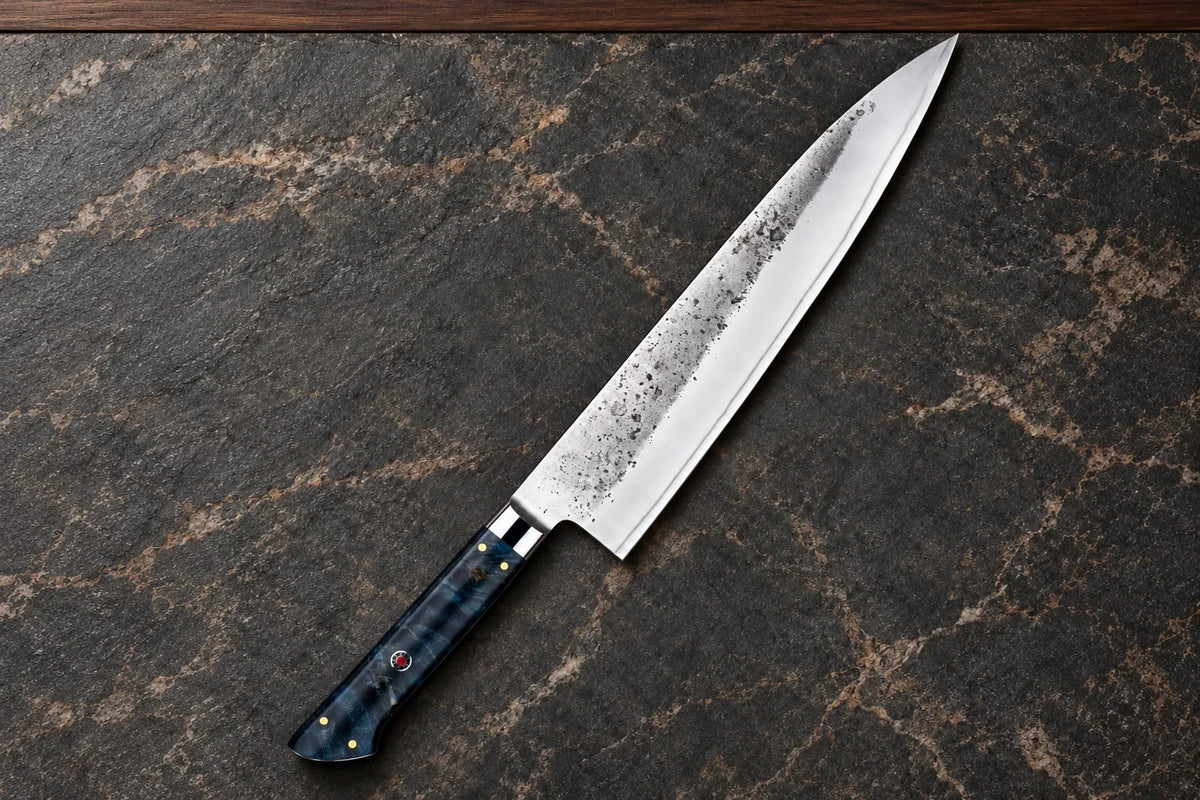
Choosing a Gyuto or Nakiri starts with the mix of ingredients you prepare. KIRU describes its Indigo Gyuto for everyday slicing, chopping and dicing of vegetables and boneless meat. The Indigo Series Nakiri Knife is a more focused vegetable option, with a tall, straight profile designed for push cuts. One addresses a broader preparation role; the other gives vegetable work its own place.
This comparison concerns these two Indigo models. Their names help identify the roles, but the useful choice comes from their actual descriptions and your own dinner routine.
Choose the Gyuto for a mixed preparation list
A stir-fry preparation might include an onion, peppers, courgette and a boneless protein ingredient. If you want one main blade to consider for that range of work, the Indigo Series Gyuto Chef Knife matches KIRU’s broader stated uses. Think about the order of tasks and the different cuts the recipe asks for, rather than expecting every ingredient to receive the same treatment.
The same reasoning applies to a kitchen where dinners change frequently. You may prepare vegetables one evening and a mixed tray meal the next. A broader listed role can be a sensible first choice when the ingredients vary and you are still defining the rest of your knife setup.
Choose the Nakiri for a vegetable-first routine
A cook who regularly prepares slaw, mushrooms, leeks and other ordinary vegetables may value a separate vegetable-oriented blade. KIRU lists the Indigo Nakiri at 7 inches, approximately 18cm, and describes its straight, tall profile. Those are specific details to consider alongside the cuts you prefer, such as slices for a vegetable side or chopped pieces for a sauce.
Picture a mushroom-and-leek dinner: the mushrooms need slices and the prepared leek needs shorter pieces. The choice centres on giving repeated vegetable work a distinct tool. It need not imply replacing the smaller knife you use for a short trimming job or the broader knife you use for mixed ingredients.
A useful comparison is a week of packed lunches against a week of mixed dinners. Repeated vegetable portions may make the dedicated role appealing; a changing list of ingredients may favour keeping one broader blade at the centre of preparation.
Decide whether the second role adds enough
If you already own a useful general preparation knife, ask what a dedicated vegetable blade would change about your routine. Perhaps vegetables make up most of your chopping and you want to choose a profile around that work. If your vegetable preparation is occasional and mixed into many other tasks, the broader role may remain your priority.
Conversely, if the Nakiri would be your only substantial prep knife, look at the other foods you regularly prepare. A clear vegetable purpose is valuable when it fits, but a purchase should leave the rest of the week accounted for. Our guide to choosing a first kitchen knife helps turn those meals into a short list of roles.
Compare the shared details after the job
KIRU lists stabilised wood handles and a hardness of 60±2 HRC for both Indigo models. Those shared listed details help you read the range consistently, while the task descriptions remain the main distinction here. Similar material wording does not make two profiles interchangeable for your preference.
Use a simple final choice: mixed preparation points towards the Gyuto; a repeated vegetable-first role points towards the Nakiri. Explore the Knife Series with that job in mind. Adding both becomes a considered decision when each has a clear purpose in the meals you actually cook.

Leave a comment
This site is protected by hCaptcha and the hCaptcha Privacy Policy and Terms of Service apply.