
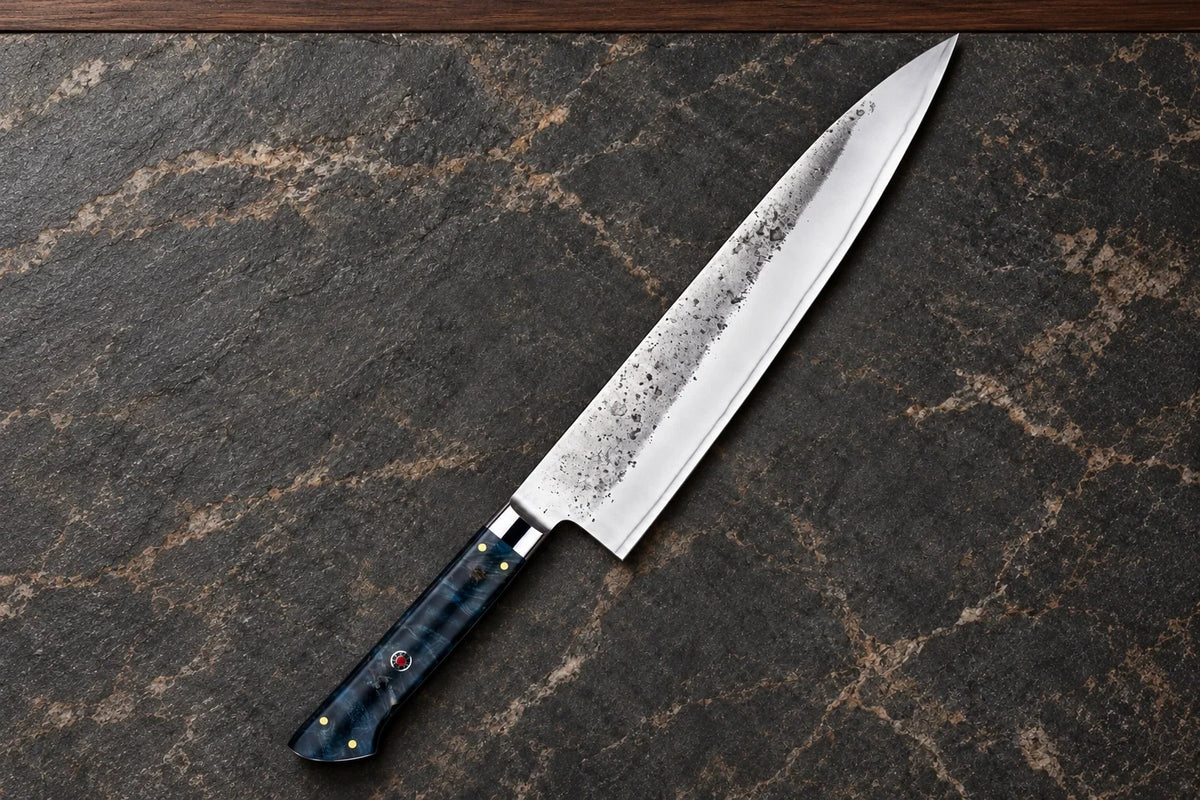
A first kitchen knife for a home cook should answer an ordinary question: what do you prepare most often? If dinner usually involves onions, peppers, courgettes and a second ingredient to slice, a broader everyday blade is a useful starting point. KIRU describes the Indigo Series Gyuto Chef Knife for slicing, chopping and dicing vegetables and boneless meat. That makes its intended role clear before you consider its finish or handle.
Think about the last three dinners you cooked. Write down the preparation rather than the dish names: small onion dice, pepper strips, courgette rounds, fruit wedges. This turns a vague wish for a good knife into a practical choice you can assess.
Begin with the meal you repeat
Imagine a vegetable pasta dinner. The onion needs small pieces for the sauce, the peppers need strips and the courgette needs slices. A knife chosen for mixed preparation gives you one main role to consider across those jobs. You can then decide whether a smaller blade already in your kitchen covers the short, detailed work.
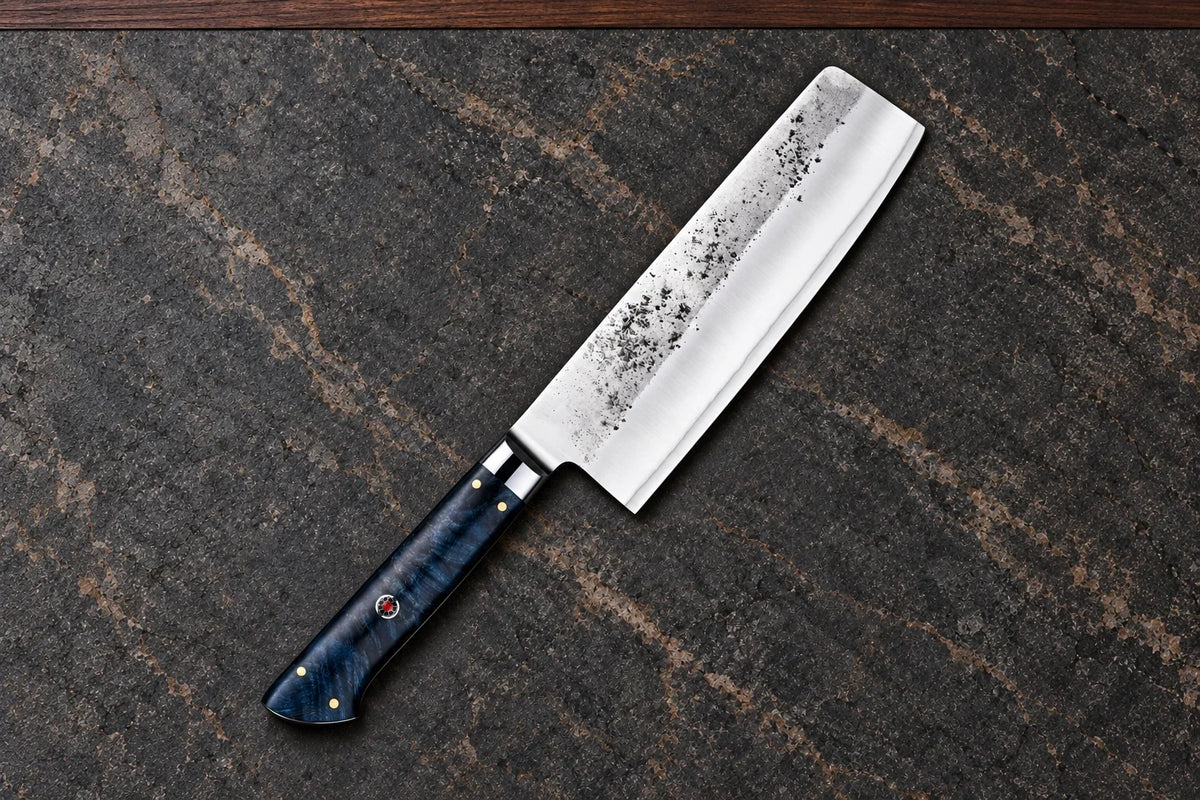
For a different cook, dinner might revolve around several vegetable dishes: sliced cabbage, chopped mushrooms and prepared greens. Here, the Indigo Series Nakiri Knife offers a more focused alternative. KIRU lists a tall, straight vegetable-oriented profile designed for push cuts. Choose that specific purpose because it matches your cooking, rather than because the name sounds specialised.
Identify the role that is actually missing
Your first considered purchase does not have to replace every knife you own. You might already have a useful small knife but lack a larger everyday option. Equally, you may have a general prep knife and want a dedicated vegetable role. Look at which job makes you reach for an unsuitable substitute, then address that gap.
A short list helps: one main preparation job, one secondary job and the ingredients involved. For example, main job: chopping vegetables for weekday sauces. Secondary job: slicing boneless ingredients for the same meal. That points towards a different decision from mainly preparing small fruit portions.
Give the knife a workable cutting area
Consider where the preparation happens. A board partly covered by a bowl and packets leaves less usable room than its dimensions suggest. Before adding tools, arrange a clear cutting area and a separate place for prepared ingredients. Picture your usual onion, pepper or courgette on that board, rather than judging scale from a product photograph.
This is also a chance to think about storage. A new blade needs a defined home between meals. Include that space in your decision now, especially if the worktop is shared with a kettle, toaster and draining area. The aim is a setup you can return to, rather than another object competing for the same corner.
Consider a set only when it answers several roles
If several preparation roles need replacing together, a set can be worth examining. The Kanso Series has named five-piece options, including a version with a wood cover. Compare the current included pieces with the jobs on your list; the piece count alone cannot tell you whether the set fits your routine.
For one missing everyday role, keep the comparison simple. Browse KIRU’s Knife Series by the actual blade or selected variant, then choose the one whose described use matches the preparation you repeat. A purposeful first knife begins with dinner, the board and a job worth giving it.

Leave a comment
This site is protected by hCaptcha and the hCaptcha Privacy Policy and Terms of Service apply.