
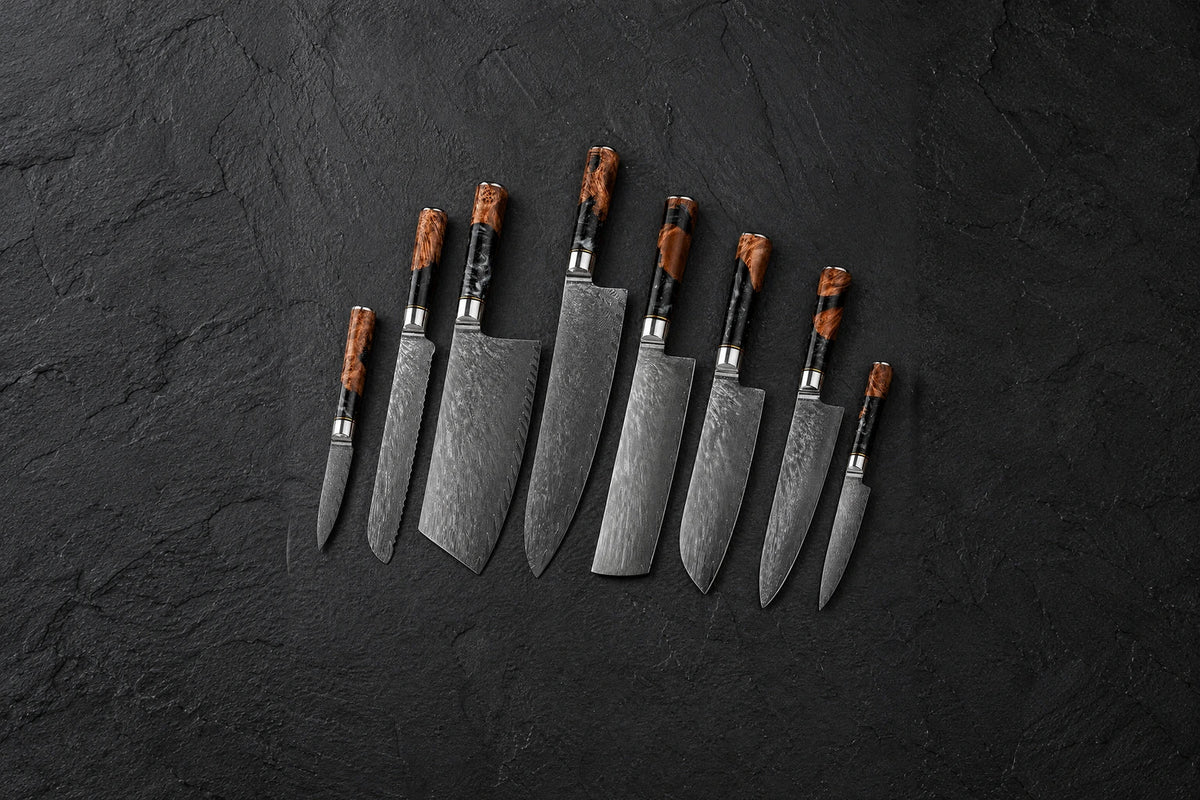
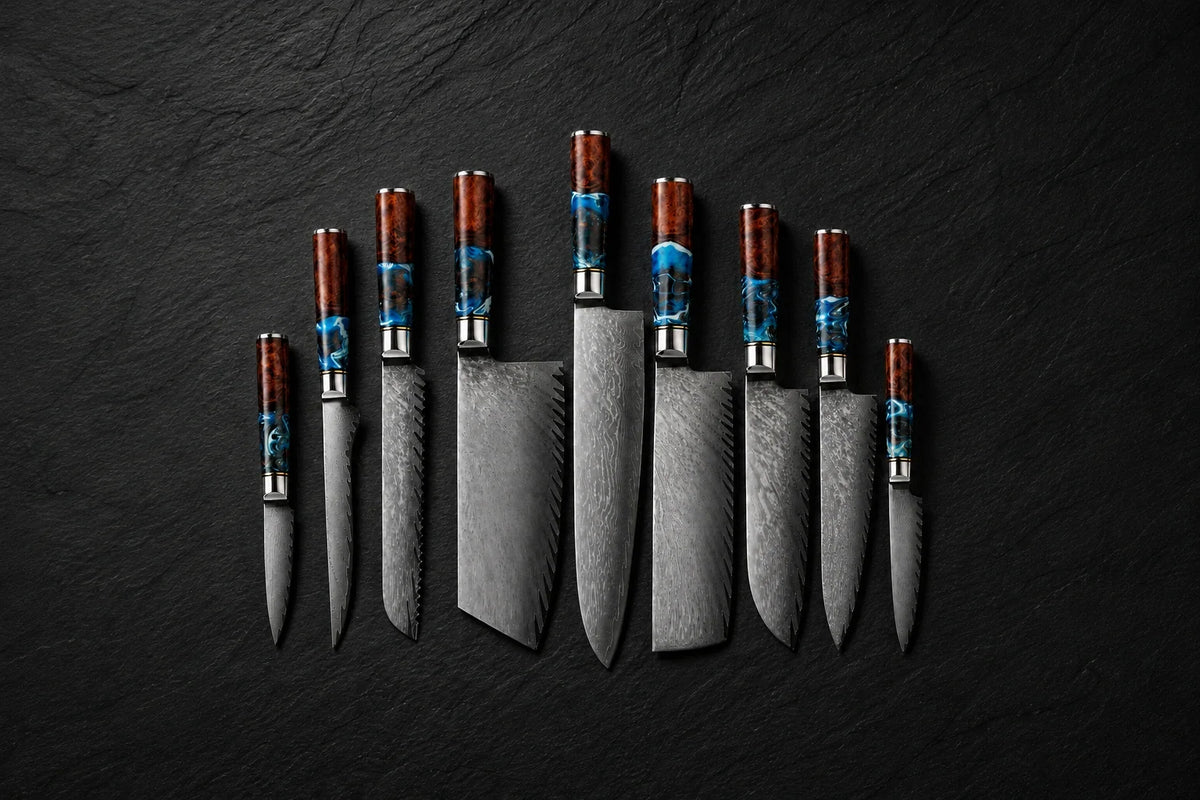
Choosing between a utility and paring knife starts with the smaller board tasks you repeat. The Timber Series offers a 3.5 inch Paring and a 5 inch Utility option. The named lengths give you a concrete comparison: a smaller paring-designated blade or a longer utility-designated blade for the role you want to add.
Think about fruit portions, a small onion or a few prepared vegetables for lunch. These jobs can be easy to overlook when buying a main knife, yet they may be the ones you repeat most often.
In Shun/KAI’s blade-shape guide, paring knives answer small trimming and detail jobs; utility knives occupy an intermediate role between paring and a larger chef knife. Use that background alongside Timber’s actual options.
Consider the smaller paring role
A fruit plate for one or two people can involve small, separate tasks: portioning a prepared apple, making pear wedges or trimming a piece before cutting it into a bowl. If your missing role is a compact knife for these short board-based jobs, the 3.5 inch Paring option is the one to examine first.
Keep the example modest. This is a choice about scale and the type of preparation you enjoy, rather than a demonstration of intricate carving. Look at the actual blade image and selected option, then picture your familiar fruit and board together. A smaller blade makes sense when that smaller role is what you want.
Consider the utility role for a little more reach
A sandwich lunch might ask for slices of cucumber, a small tomato and a prepared onion. If you want a small prep knife with a longer named blade than the paring option, compare the 5 inch Utility. It gives you a distinct option to assess for these mixed smaller ingredients.
You might also use your main blade for a larger dinner preparation and reserve the smaller role for the few ingredients that finish it. The useful question is whether those jobs call for your smallest knife or the longer utility option. A range name cannot answer that; the selected profile and task need to meet.
A single prepared pear and a row of cucumber slices are useful contrasting examples. One is a short portioning job; the other asks for repeated board work. Choose the smaller role you want to make a regular part of preparation.
Make the new role complement your main knife
If you already have a larger general prep knife, a smaller option can address a different part of the meal. Picture preparing onions and peppers for dinner, then returning to a short fruit portioning job. Decide whether you would welcome a distinct smaller blade for that second task, rather than another version of the larger one.
The Harbor Series also lists 3.5 inch Paring and 5 inch Utility options, offering another range to compare once the role is clear. Its handle is listed as natural hardwood and composite resin; Timber lists maple burl wood and high composite resin. Consider those exact descriptions after choosing the preparation purpose.
Use a simple pair of questions before choosing
First, which ingredient best represents the job: a small fruit portion or a series of mixed small board tasks? Second, how does the selected knife sit beside the role you already own? The answers help you compare the paring and utility options without collecting both automatically.
Our Santoku and chef option guide covers the separate main-prep decision. For this smaller purchase, browse the Knife Series and select the exact paring or utility variant deliberately. A useful small knife earns its place through the everyday job you can name.

Leave a comment
This site is protected by hCaptcha and the hCaptcha Privacy Policy and Terms of Service apply.