
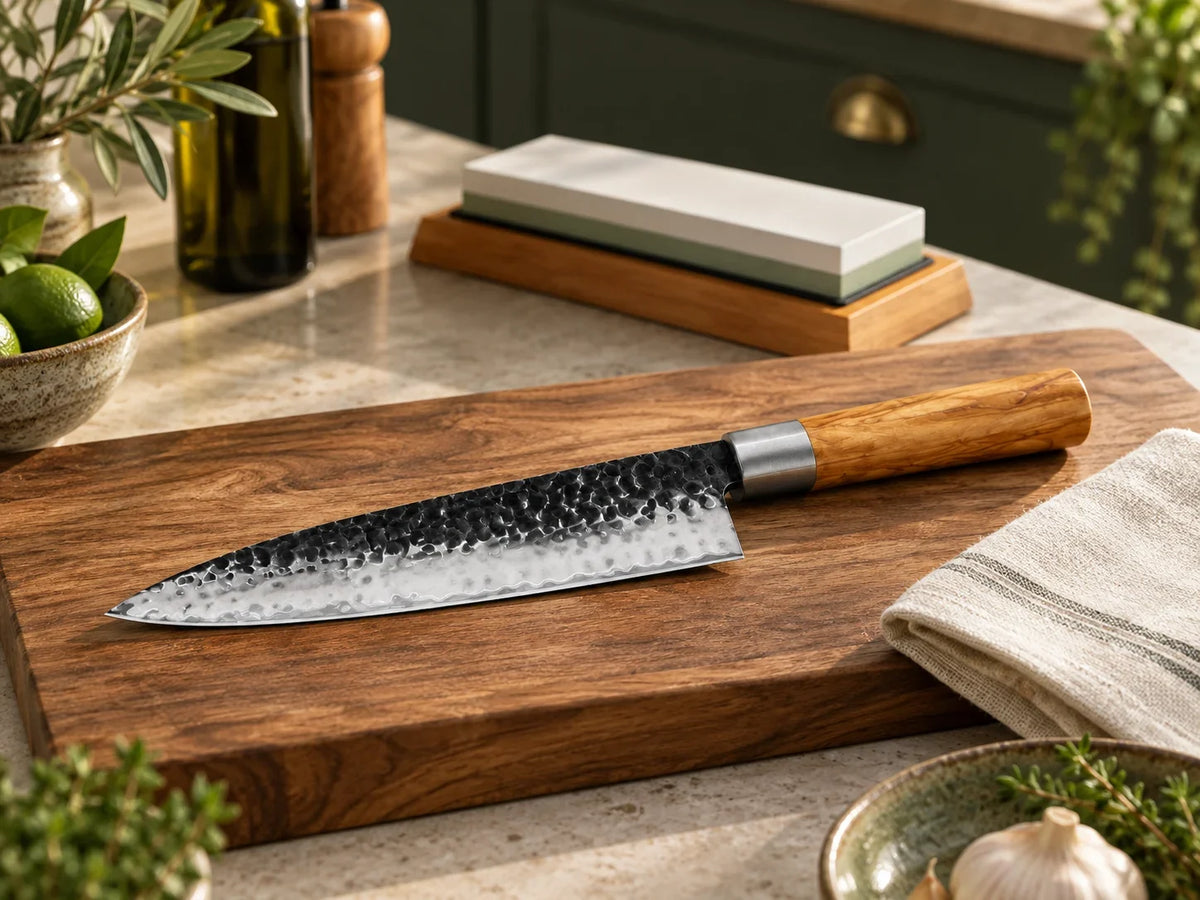
Good Damascus knife care is mostly about the habits around cooking: use an appropriate board, clean the knife by hand, dry it thoroughly and give the edge its own protected storage space. The blade pattern is only one part of the knife; the cutting core, handle and edge all deserve attention.
KIRU’s range includes several different steel and handle combinations. Follow the care instructions for your exact knife, and use this guide as a practical starting point for an everyday routine.
Know which knife you own
“Damascus” does not identify a single steel or handle material across the whole range. For example, the Olive Damascus Series lists a 67-layer construction with an AUS10 core and olive wood handles. The Carbon Damascus Series lists a 10Cr15CoMoV core with carbon fibre and resin handles.
Keep the product name and selected option with your order information. When you need care or sharpening advice, that is more useful than describing the knife only by its colour or blade pattern. A sharpening angle should come from the specification for the actual knife, rather than a general rule for every Damascus blade.
Clean and dry the knife after prep
Hand wash the knife with gentle washing-up liquid, rinse it and dry it immediately with a soft cloth. Avoid prolonged soaking or leaving it hidden in a sink. Dry the blade, the area near the handle and the handle itself before storage. A dishwasher is a poor substitute for this controlled, careful routine.
Keep abrasive cleaning away from the blade’s decorative surface unless the maker specifically recommends it. If a mark remains, identify what it is and ask for product-specific advice before using a strong cleaner. A surface mark, rust and damage to an edge do not all need the same treatment.
Make the board part of your care routine
A wooden chopping board is a sensible starting point for fine kitchen knives. Avoid cutting directly on glass, stone or a ceramic plate. Do not use a fine kitchen blade to force through bones or frozen food, or twist it sideways to free it from an ingredient.
Arrange the prep area before you start: a stable board, space for the whole blade and a clear place to set the knife down. If the edge starts struggling with an ordinary task, stop and assess it rather than compensating with more force.
Treat the handle as part of the knife
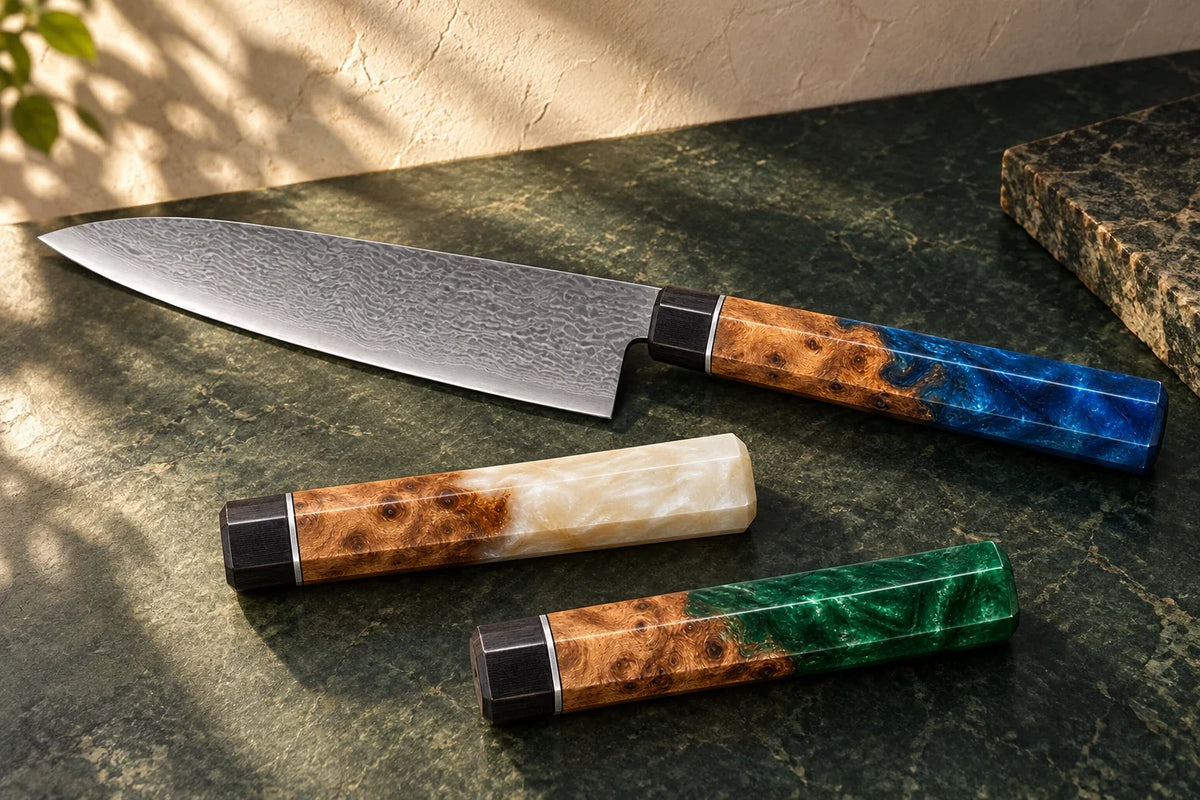
The Kanso Series pairs a high-carbon AUS10 core and layered 430 steel with an olive wood handle. Other KIRU series use resin or combinations of wood and resin. Those materials can look quite different, so do not assume the same cosmetic treatment is appropriate for every handle.
For day-to-day care, focus on gentle cleaning and thorough drying. If a wooden handle appears dry or needs treatment, ask which product is suitable for its particular finish. Do not apply an oil or polish simply because it is recommended for a different wooden kitchen item.
Choose sharpening tools by compatibility
Cleaning does not restore a worn edge. KIRU offers several maintenance approaches, and they are different tools rather than interchangeable versions of one method.
- The Knife Sharpening Kit includes a dual-sided whetstone, angle guide, non-slip base and bamboo holder.
- The Barrel Kit uses a rolling disc system with 15° and 20° angle choices.
- The Knife Sharpening Rod has a diamond-coated surface, so it should not be treated as identical to a smooth honing steel.
Check that a tool supports your knife’s existing edge geometry before using it. An available angle is not automatically the right angle for every KIRU series. Follow the tool’s instructions, including any preparation required for a stone. If you cannot confirm compatibility, ask before removing metal from the blade.
Finish with dry, separate storage
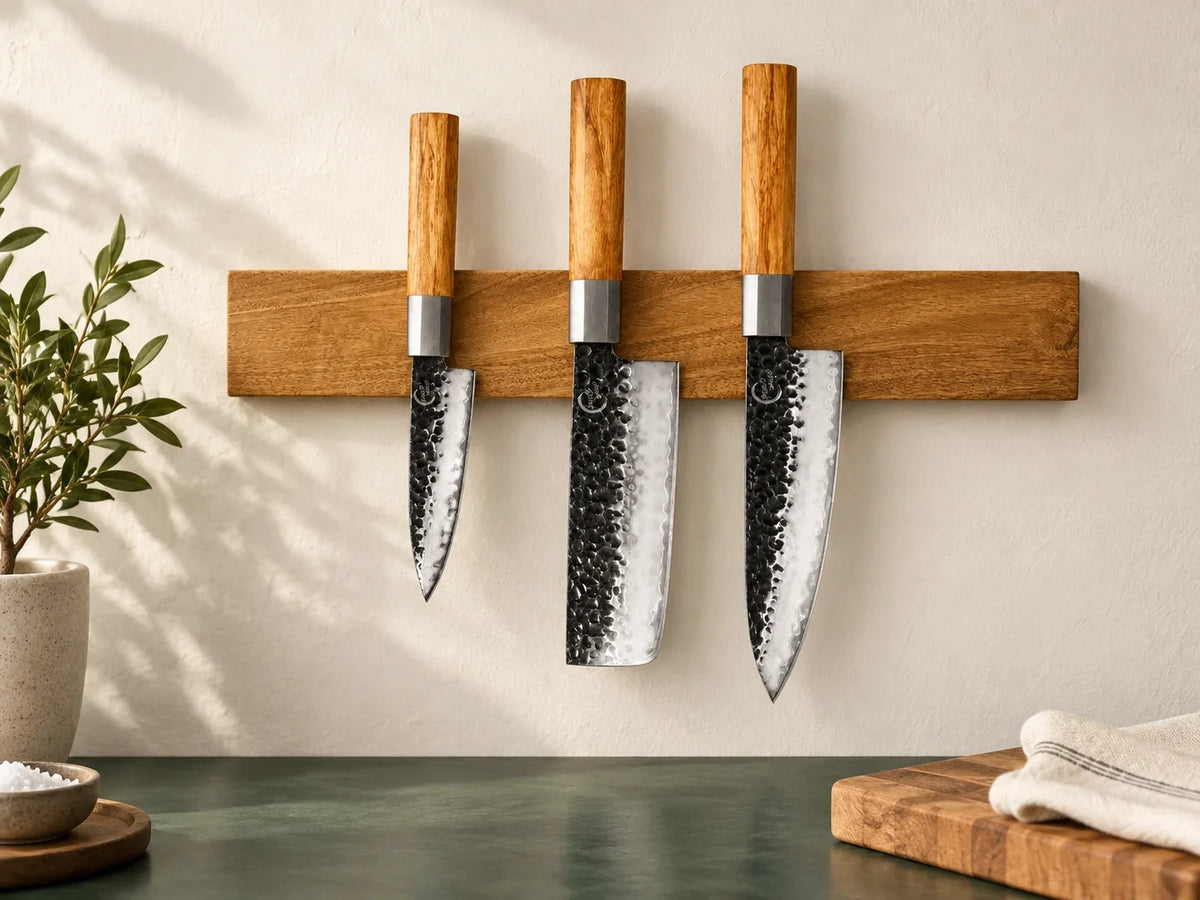
A knife should not rattle against other utensils in a drawer. Give it a suitable block, correctly installed magnetic holder or another edge-protecting storage solution. Make sure the knife and storage surface are dry first.
Think of storage as the last step of prep, rather than a separate kitchen project. Our guide to storing kitchen knives helps you compare the space needed for different options.
Damascus knife care FAQs
Does Damascus steel mean rust-proof?
No. The label does not remove the need for cleaning and drying. Check the actual steel specification and care guidance for the knife you own.
Should every Damascus knife be sharpened at 15°?
No. Match the angle and method to the exact blade. Do not change an edge to fit a sharpener without confirming that it is appropriate.
How often should I sharpen my kitchen knife?
There is no single schedule for every cook. Usage and the edge’s condition matter. Assess normal cutting performance and follow the maker’s guidance instead of sharpening automatically after a fixed number of meals.
Browse sharpening essentials with your knife’s specification to hand.
Further reading: Shun’s general knife use and care guidance. Product-specific KIRU instructions take priority for your own knife.

Leave a comment
This site is protected by hCaptcha and the hCaptcha Privacy Policy and Terms of Service apply.