
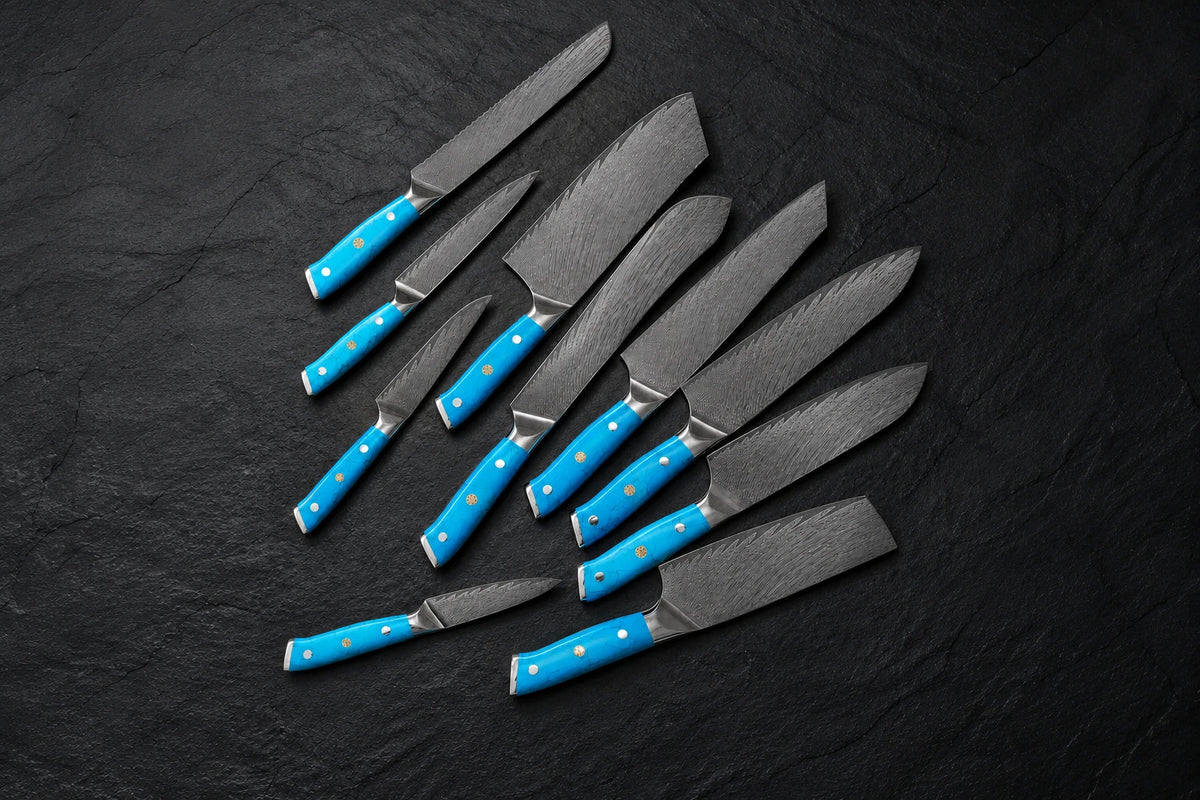
To choose a knife series variant, start with the option selector rather than the range name. The Lagoon Damascus Series includes separate paring, utility, Santoku, Nakiri, chef, bread and other named options. Each is a different selection within the same visual family, so the role you choose matters as much as the series you like.
A useful buying sentence contains both parts: the range and the actual option. “Lagoon, 5 Inch Utility” is a preparation choice you can assess. “Lagoon” alone leaves the blade role undecided.
Separate shared materials from the selected profile
KIRU lists a stabilised turquoise stone handle for Lagoon, alongside its model-specific construction details. That shared appearance may help you compare ranges. The option label does another job: it identifies the profile you intend to use for preparation.
For a small lunch task, you might examine the 5 Inch Utility. For a main everyday role, you might consider the 8 Inch Chef. For a dedicated bread position, the 8 Inch Bread is a separate option. A preference for the same handle appearance can accompany several different kitchen jobs, but it cannot choose the job for you.
Read broad series names carefully
The Nakiri Knife Series illustrates why the selector matters even when a profile appears in the name. Its option list includes a 6.7 inch Nakiri Knife, alongside paring, utility, boning, Santoku, chef and Kiritsuke options. The flat vegetable-oriented description associated with the Nakiri option cannot describe every blade in that broader list.
Use this as a reading example rather than treating the heading as a single product shape. The same habit is useful whenever a page offers several profiles: inspect the selected name, its image and the information attached to that particular choice.
Match the option to an ordinary preparation job
Imagine a dinner that needs chopped vegetables, a small fruit portion afterwards and bread at the table. Those are separate preparation roles. Decide which one is missing in your kitchen, then locate the corresponding option. You do not need to choose all three because they share a range.
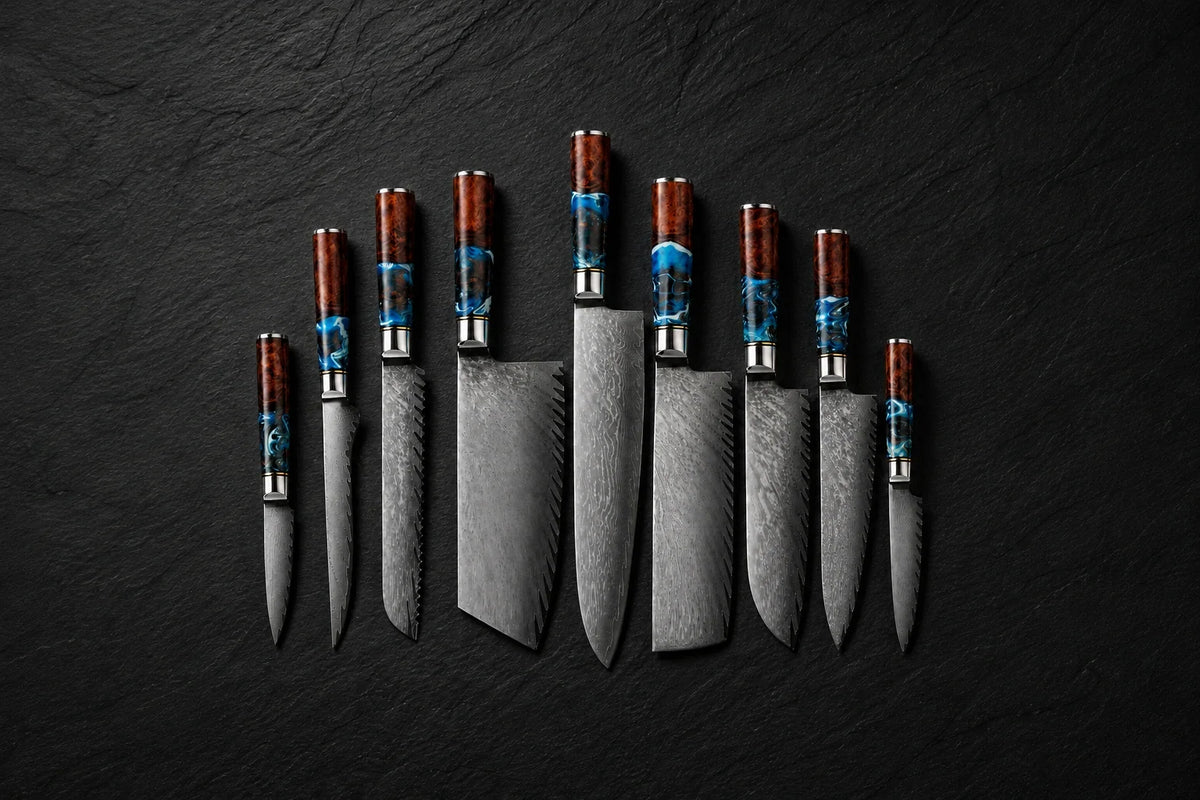
The Timber Series provides another example, with named paring, utility, Nakiri, bread, Santoku and chef options. Compare the exact one you want with your current tools. A series can help create a coordinated appearance over time without turning every variant into an immediate need.
Keep your shortlist specific. For instance, compare a Lagoon 5 Inch Utility with a Timber 5 inch Utility if your aim is smaller board preparation. Compare chef options with chef options when replacing the main blade. If the sizes or profiles differ, write down that difference explicitly so a handle preference does not obscure it.
A coordinated kitchen can also develop gradually: an everyday blade now, a separate bread role later and a smaller preparation option only when useful. The range provides a visual connection while each selection remains tied to its own job.
Check the selection before completing the choice
Read the full selected option name, including its stated size where present. Then return to the preparation role you identified. Does the blade you are considering answer that role, and do the current image and description support the choice? This small pause keeps the purchase connected to the meal.
For several missing roles, our single knife or set guide offers a different comparison. Browse the Knife Series with the range and variant held separately in mind. Choose a particular blade first, and let the coordinated series support that decision.

Leave a comment
This site is protected by hCaptcha and the hCaptcha Privacy Policy and Terms of Service apply.