
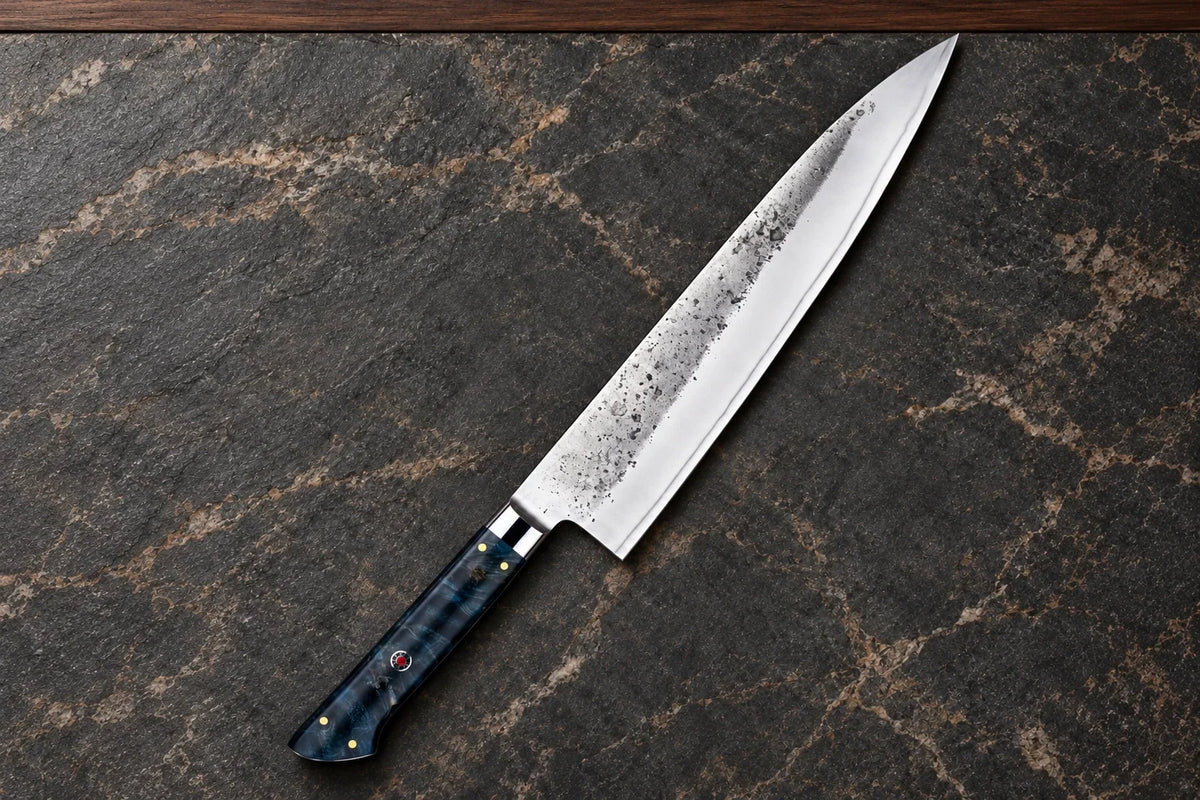
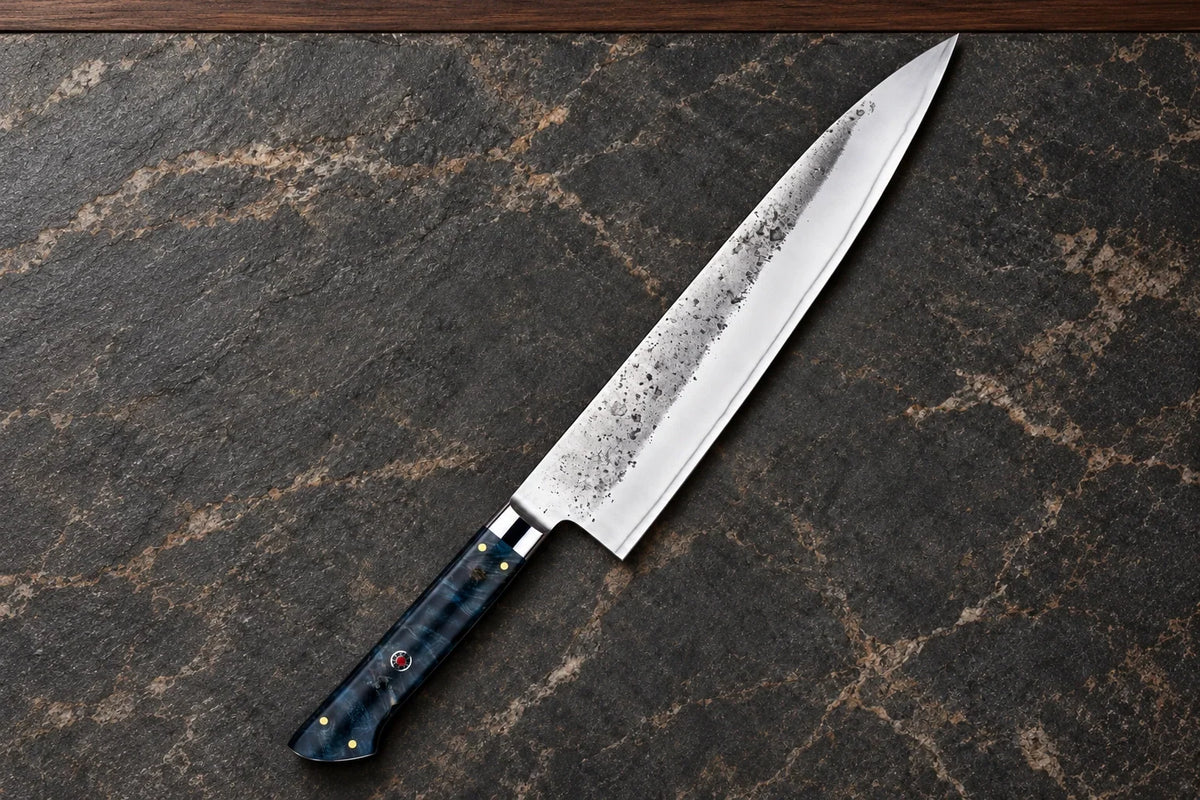
A wood vs resin knife handle choice is often more specific than it first sounds. KIRU lists stabilised wood for the Indigo Series Gyuto Chef Knife. Other ranges combine named wood materials with resin. Compare the complete description of the actual model, then consider which appearance you would like alongside the blade role you need.
A handle is part of the knife you are choosing, rather than a separate decoration. Begin with the everyday preparation job and selected profile, so an appealing material does not lead you towards the wrong option.
Read the material combination in full
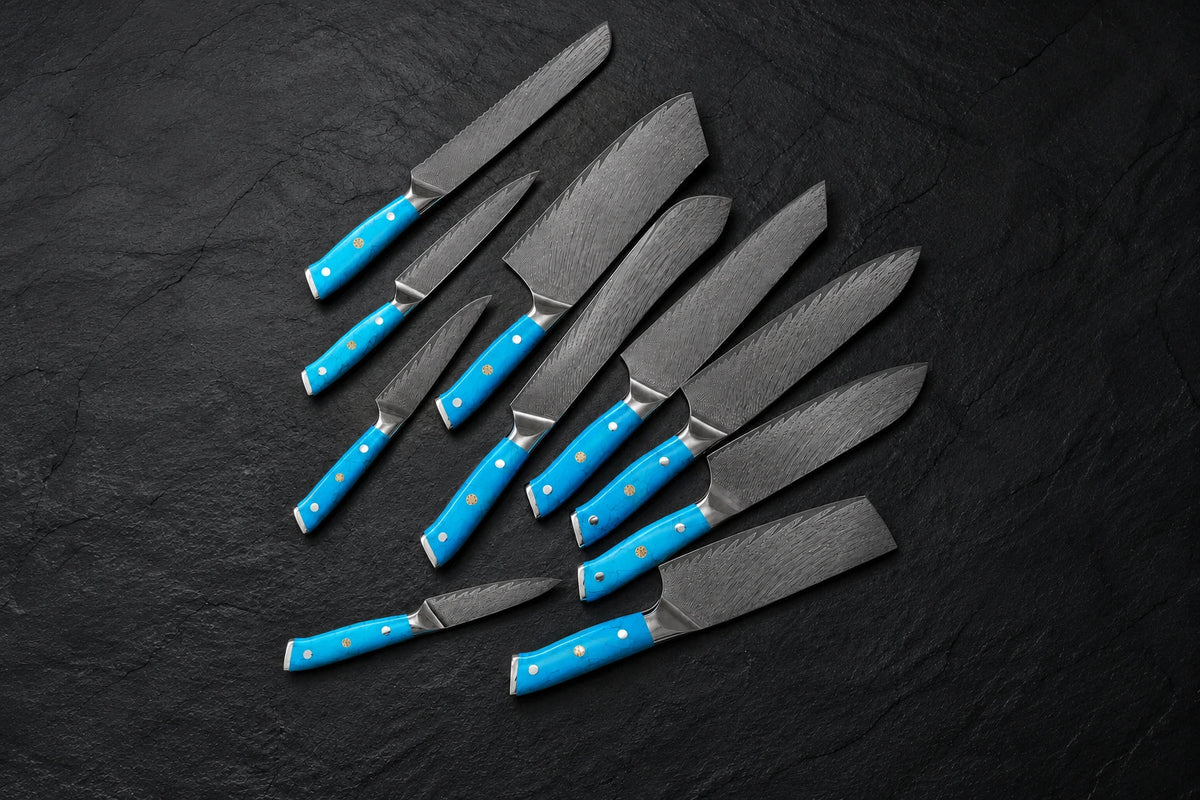
The Harbor Series lists natural hardwood and composite resin. The Timber Series lists maple burl wood and high composite resin. These are distinct combinations to compare with Indigo’s stabilised wood description. Keep those terms attached to their own range.
If your initial preference is simply “wood”, examine what that means in each listing. You might favour the particular wood-and-resin appearance shown for one range, or prefer another material description. Use the current product images to assess colour and visible character while the written information identifies the materials.
Compare handles on a similar blade role
Harbor and Timber both list 5 inch Utility options, as well as other named profiles. If a smaller board-preparation role is what you need, compare that specific option across the ranges. This keeps the handle decision connected to a similar job instead of comparing one range’s paring blade with another’s larger chef blade.
For a main preparation purchase, compare the actual everyday option you want. The Indigo Gyuto has a stated role in slicing, chopping and dicing vegetables and boneless meat. Harbor and Timber offer named chef options. Your preferred handle combination can then become one part of a focused main-blade shortlist.
Consider the appearance of the whole setup
Imagine the knife alongside the board and storage you already use. A cook with a visually simple kitchen might prefer to keep one chosen handle material at the centre of the setup. Another might enjoy a contrasting wood-and-resin appearance as a deliberate detail.
If you plan to add another knife later, decide whether matching the series matters to you. A coordinated appearance can be a preference without making every profile necessary. You can choose one useful blade now and return to the range when a different preparation role becomes relevant.
For a shared kitchen, also consider how the knives will be identified by their actual roles. A matching handle appearance connects the range visually, but the named blade options still need to be understood separately by the people using the preparation area.
Keep material preference separate from a promised feel
Terms such as stabilised wood or composite resin identify the listed material; they do not tell you everything about how a particular handle will feel to you. Read the full product information for the exact knife, including the handle’s pictured form. Ask a specific question if a detail important to your decision remains unclear.
For a practical shortlist, note three things: the blade role, the complete handle description and the appearance you prefer in your kitchen. That is enough to make this choice deliberate without inventing a care treatment or a universal comfort claim.
Our steel and hardness guide covers another part of the listing. Browse the Knife Series with the preparation role settled, then choose the actual material combination that fits your preference for the complete knife.

Leave a comment
This site is protected by hCaptcha and the hCaptcha Privacy Policy and Terms of Service apply.