
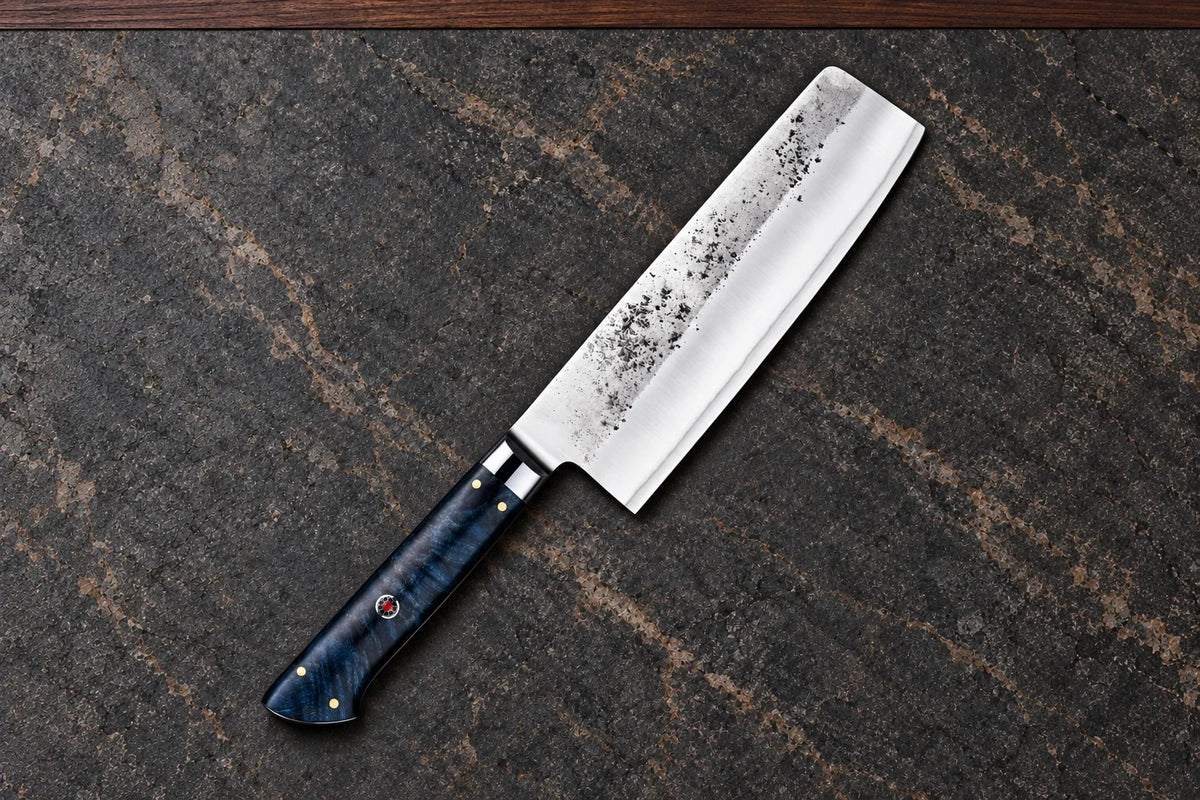
A knife for soup vegetables should match the preparation your recipe asks for. Mushrooms to slice, a prepared leek to cut into shorter pieces and a small ingredient to trim are distinct jobs. The Indigo Series Nakiri Knife has a tall, straight vegetable-oriented profile designed for push cuts, making it a specific option to assess for repeated ordinary vegetable preparation.
Begin with the soup you want to make: a recipe with visible vegetable pieces gives you one set of cuts to plan; a recipe intended for a smoother finish gives you its own preparation instructions. Follow that chosen recipe rather than assigning one cut to every soup.
Use the season as an ingredient starting point
Jamie Oliver’s October ingredient guide, published in 2022, includes mushrooms among its seasonal choices.
For your own autumn lunch, you might choose a mushroom soup recipe or a vegetable recipe involving leeks. Keep the ingredient decision distinct from the knife decision: first choose the dish, then identify the board work it requires. This makes the preparation list practical rather than an assortment of seasonal ingredients without a plan.
Write the cuts beside the ingredients
Place a short note beside each ingredient on your recipe list: slices, smaller pieces or another specified cut. With mushrooms, ask whether the recipe wants visible slices or chopped pieces. With a prepared leek, note the cut described by the recipe. You can then see which jobs repeat and which are brief finishing tasks.
Keep ingredients that enter the recipe at different stages in separate prepared-ingredient bowls if that suits the dish. If the recipe combines them together, a shared bowl may be enough for your layout. The choice follows the recipe’s order, rather than adding a complicated station to a simple soup.
A soup with visible mushroom slices gives you a particular shape to aim for. A different recipe may ask for chopped mushrooms and shorter leek pieces instead. Keep those examples separate in your shortlist: the same ingredient can lead to a different preparation job depending on the dish you choose.
Give vegetable work a deliberate blade role
KIRU lists the Indigo Nakiri blade at 7 inches, approximately 18cm, with a stabilised wood handle. The vegetable-oriented description is the main reason to consider it for the recurring cuts in this example. Its exact model details help you assess the profile in relation to the board you use.
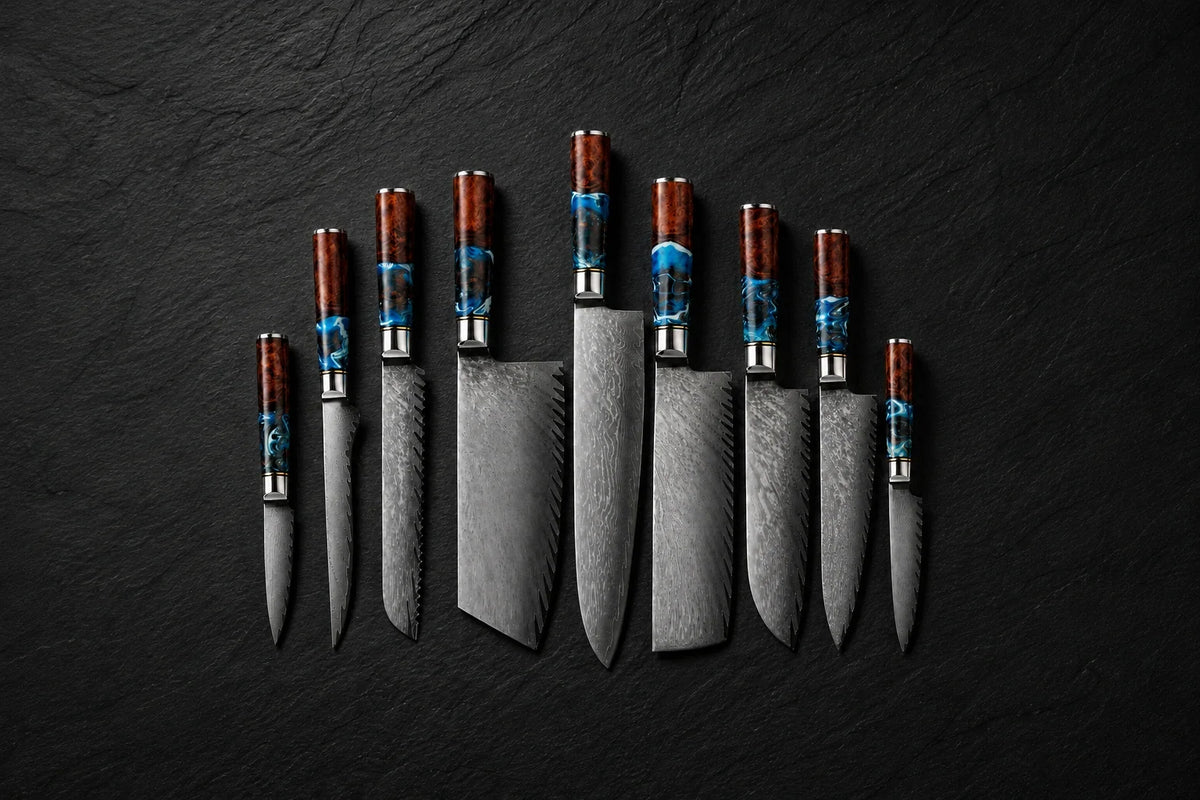
A smaller job may deserve a separate role. The Timber Series includes a 3.5 inch Paring and 5 inch Utility option. Examine those particular choices if your soup preparation involves a short board-based trimming or portioning job beside the larger vegetable work.
Plan the soup lunch beyond the first ingredient
If the meal includes bread, identify that as a separate serving task. The Lagoon Damascus Series includes an 8 Inch Bread option alongside other profiles. Choose the actual bread-designated variant deliberately rather than treating Lagoon as one blade for the entire lunch.
For a small soup lunch, you may only need a modest preparation area and a few familiar ingredients. For a shared meal, you may want more space for the prepared vegetables and bread portions. Keep the amount you usually cook in mind when choosing which knife roles to add.
Our guide to a dedicated Nakiri role explores the vegetable-first decision. Browse the Knife Series after naming the cuts your soup recipe needs. A clear ingredient list and distinct preparation roles are useful starting points for the autumn meal you intend to make.


Leave a comment
This site is protected by hCaptcha and the hCaptcha Privacy Policy and Terms of Service apply.