
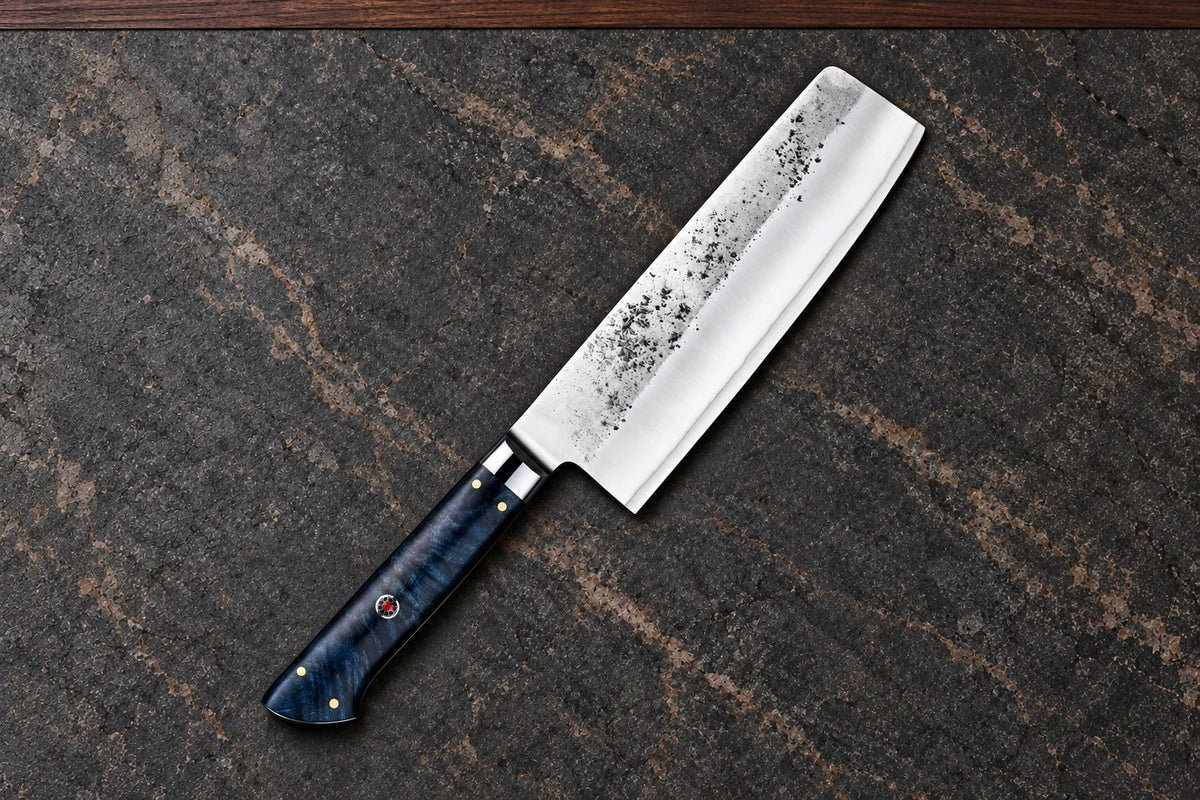
Nakiri knife uses for vegetables are most relevant when vegetable preparation is a repeated part of your cooking. KIRU describes the Indigo Series Nakiri Knife as a tall, straight vegetable-oriented profile designed for push cuts. It lists a 7-inch blade, approximately 18cm. Consider that specific role for ordinary vegetables and the cuts your recipes ask for.
A dedicated vegetable blade is a deliberate addition. Start by looking at how often you prepare mushrooms, leeks, courgettes and similar ingredients, then decide whether you want their preparation to have a separate place in your knife setup.
Begin with the cut the dish needs
A mushroom-and-leek pie filling might call for mushroom slices and shorter prepared leek pieces. A courgette side may need rounds rather than small diced pieces. These examples give you concrete reasons to examine the vegetable-oriented profile, because the preparation is a regular task with a clear intended finish.
Read the recipe before setting the ingredients on the board. If it needs distinct shapes, give each one a separate job on your list. If several vegetables share a cut size, group those tasks in your preparation plan. The knife choice should support that plan rather than decide the recipe.
Consider the dedicated role beside a broader knife
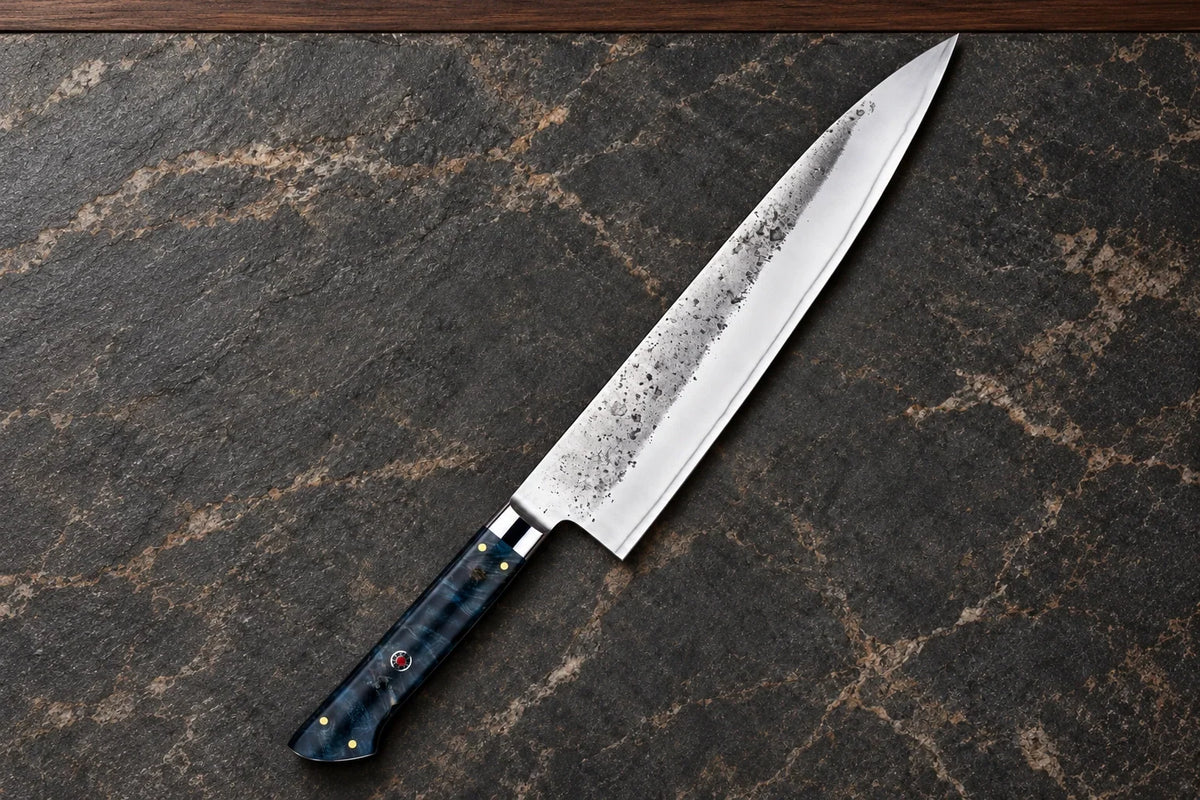
The Indigo Series Gyuto Chef Knife has a broader described role in slicing, chopping and dicing vegetables and boneless meat. If you already use a main blade for mixed meals, the Nakiri can be considered specifically for the vegetable work you want to emphasise.
For example, you might cook vegetable-heavy dinners several nights a week but also want a broader blade for a different meal. The two roles can then be written separately: dedicated vegetable preparation and mixed everyday preparation. This helps you decide whether adding the second blade is worthwhile for your routine.
Use a realistic amount of preparation
A single courgette side and a dinner with several vegetable components involve different amounts of repeated work. Picture the meals you normally cook, including the number of people, rather than imagining a large preparation session that rarely happens. A dedicated role can be useful without a restaurant-sized ingredient list.
For a smaller meal, you may prefer one ingredient on the board and a bowl nearby. For several vegetable components, you may want separate prepared-ingredient bowls that reflect the recipe stages. The profile decision and the space plan belong together, particularly if your board shares a narrow counter.
A useful preference test is to choose one familiar vegetable dinner and identify the main repeated cut. If that cut is central to several meals you enjoy making, it gives the dedicated vegetable role a concrete reason to be considered.
Read this Nakiri as an individual model
KIRU lists stabilised wood for the handle, a three-layer Sanmai construction with a 10Cr15CoMoV core and hardness of 60±2 HRC. These details identify the Indigo Nakiri alongside its stated vegetable purpose. They are not interchangeable with the specifications of every Nakiri-labelled variant in another range.
The tall, straight description is particularly relevant to the profile decision. Keep the preparation examples ordinary and tied to the intended vegetable role. For this purchase, the useful question is whether you want a dedicated blade for the vegetable cuts you prepare repeatedly.
Our mixed vegetable Gyuto guide looks at the broader main-prep alternative. Browse the Knife Series with those roles kept distinct. Choose the Indigo Nakiri when its specific vegetable purpose adds something clear to the meals you cook most often.

Leave a comment
This site is protected by hCaptcha and the hCaptcha Privacy Policy and Terms of Service apply.